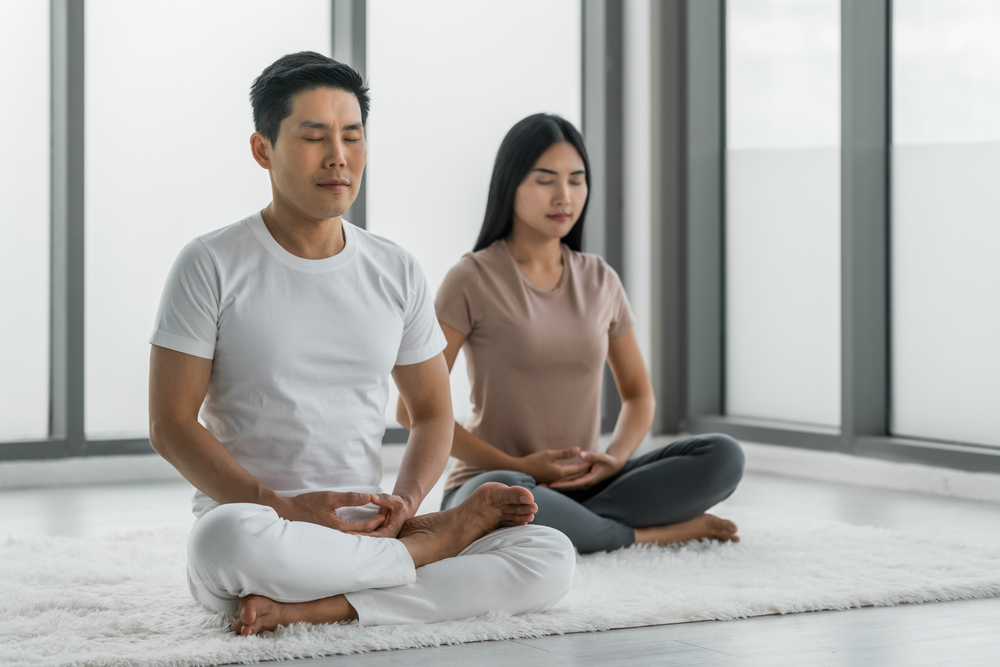
How to Deal With Restlessness During Meditation: A Gentle Guide for Real Life
Close your eyes, sit, and choose to be calm. Two minutes in, and your leg is itching, your mind is thinking about what you’re going to eat, and you’re wondering if the timer is broken.
If you feel that you have heard a similar sentiment before, you’re in good company. We’ve all had it happen. One of the biggest challenges for anyone, whether they are a beginner meditator or an expert, is restlessness during meditation. The bright side is it’s not a sign you’re not a good meditator. It just means that you are human.
In this blog, we’ll explore the underlying reasons for restlessness, what it truly implies, and the yoga tools you can practice to ease your mind. Remember, this is an interacting session, not a lecture.
What is the reason for feeling restless while meditating?
Let’s first find out what’s going on before we attempt to do anything. There are several common causes for restlessness.
- An active nervous system. We all do our jobs, sit at our computers, talk to each other, and listen to the noise of the day, on and off our phones, back and forth. When we abruptly stop, the body and mind don’t know how to downshift. Most of your restlessness is the carry-over from the day.
- Unresolved thoughts and feelings. When we take the time to be quiet, all that we have been hiding will come up. This isn’t an indication that meditation is causing problems. This means that the mind is finally getting a chance to unload.
- Physical discomfort. Sitting still may be difficult if you have stiff hips, a tight back, or a full tummy. What we call “mental restlessness” is actually the body calling for attention at times.
- Too much expectation. We all think that meditation should feel calm and relaxed from the get-go. If it doesn’t, we become frustrated, and that frustration adds another layer of restlessness to the mix.
The philosophy of yoga gives it a name. They say that the mind has a tendency to wander, chitta vritti, the fluctuation of mind, in the ancient texts. That is to say, a wandering mind is no problem. It’s the very thing yoga was meant to work with.
How to calm down when your mind starts to wander while meditating?
During our yoga and meditation practices at Maa Shakti Yog, we encourage students to approach meditation gradually. Simple movements, mindful breathing, and a comfortable sitting posture can make the transition into meditation much easier.
These are the methods that we will most often share with students, and they do work with patience.
1. Move first, then sit.
The most effective way to soothe a mind that is agitated is for the body to get some exercise before you meditate. Even a brief asana practice, a 10-minute asana practice, releases excess energy and releases the places that complain.
Do some cat-cow, a relaxed sun salutation, and a forward fold, and then a seated twist. That is why in yoga the first step is asana, before meditation. The mind is ready by the body.
2. Begin with your breath, not silence.
Many beginners attempt to go straight to the stillness. It’s sort of like stopping a train that’s already gone! Rather, take the breath as a bridge.
Here’s an easy exercise: inhale for a count of four, then exhale for a count of six. The longer you breathe out, the more your nervous system knows it is safe to relax. Repeat for 2-3 minutes prior to attempting to concentrate on something else.
For more depth, try Nadi Shodhana (alternate nostril breathing). It calms the mind and balances left and right hemispheres and is great for an overactive mind.
3. Reduce the length of your meditation session.
One thing we want you to hear: You don’t have to sit for 30 minutes. Take five minutes of sitting with full attention rather than trying to sit for 20 minutes and getting frustrated.
Start small. 5 minutes a day is more effective than 1 hour a week. Gradually increase it by one minute each as you become more comfortable.
4. Fix Your Seat
Also Read: Pranayama Before Meditation: Why the Breath Comes First
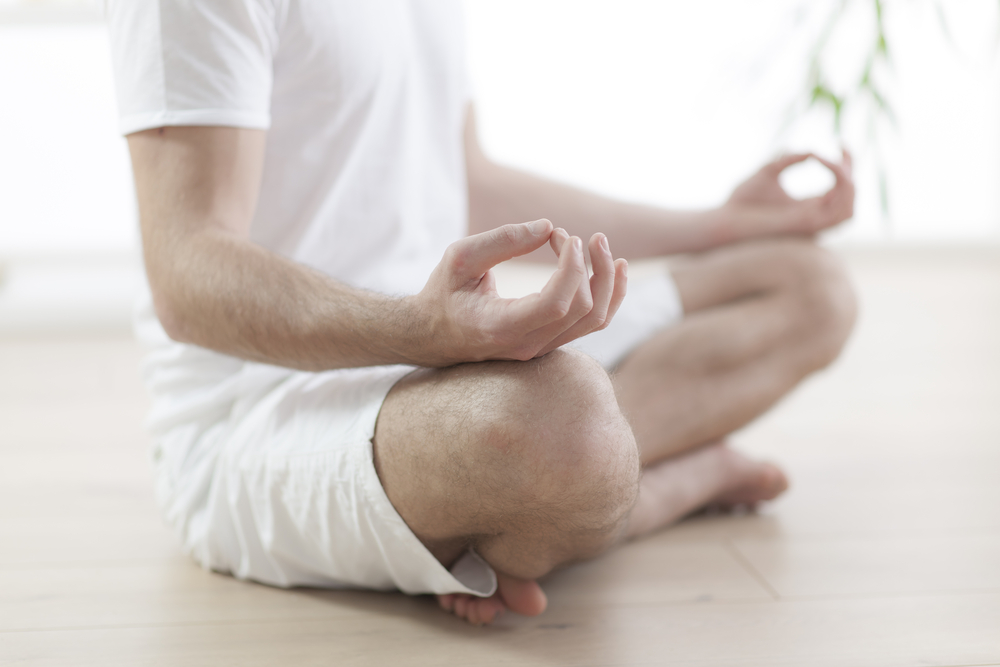
Comfort is more important than most realize. It’s not an exercise of sitting cross-legged on the floor like a statue! Try these adjustments:
- Sit on a folded blanket or cushion so your hips are higher than your knees.
- Lean against a wall for back support.
- Sitting on a chair with both feet flat on the ground.
- If you are feeling your hips getting tight, put a pillow under each knee.
If the body is supported, there’s less for the mind to gripe about.
5. Try Walking Meditation
If on any given day, you can’t sit, do not try. Walking meditation is a beautiful alternative to those who cannot meditate.
Take your time when you walk, even in a small area. Plant your heel first, then your toes, and then the lift of your foot. If you lose track of your walking, bring your attention back to the feeling of moving. It is walking meditation, and it’s just as good.
6. Put the Mind on a Simple Anchor
A wandering mind needs something to hold on to. Select one anchor and go back to that one anchor once you have been drifting:
- The sense that you are breathing air on your nostrils.
- Swelling and shrinking of the abdomen. Inflows and outflows of the belly.
- A simple mantra, such as “So Hum” (silently say so on inhale and hum on the exhale).
- The surrounding noise (noise from the environment)
A mantra may be particularly beneficial for the restless mind, as it provides the thinking mind with something to do. It is busy and you’re calm.
7. Just Relax About Restlessness
This is most likely the most important tip, which is a given. Don’t try to resist restlessness; embrace it.
So what part of my body does it affect? Does it sound like a heart beating? If you have a tightness in the jaw, A foot-tap? What happens when you watch restlessness without attempting to get rid of it? It tends to lose its string.
If you can remember that when you notice you’re restless, that’s mindfulness. This is already meditation you’re doing.
8. Make Peace With the Wandering Mind
You will be distracted. It will meander 10 times in one time of use and 50 times in that one session. Every time you think about it and return, you are reinforcing yourself in the same way that you reinforce yourself in the gym.
Don’t beat yourself up for it! Do not be discouraged; smile a little and start over again. That is the entire practice, a return that is gentle.
A restless mind takes solace from yoga practices.
In addition to the above, there are some yoga practices that are particularly beneficial for individuals who may find it difficult to sit still.
- Grounding poses. All the poses mentioned above, including Child’s Pose (Balasana), Forward Fold (Uttanasana), and Legs Up the Wall (Viparita Karani), soothe the nervous system. Hold each position for 1 or 2 minutes and concentrate on breathing slowly.
- Yoga Nidra. This relaxation technique is sometimes referred to as yoga rest, and is great if sitting meditation is challenging. You lie down and are directed through the body, which provides the mind a clear path to follow.
- Trataka. The candle-gazing exercise involves softly observing the candle flame for a few minutes, then closing your eyes and seeing the afterimage. It helps to stabilize the focus and is extremely useful for the mind that doesn’t have a lot of concentration.
- Pranayama routines. Breathing exercises like Bhramari (humming bee breath) produce a calming sound, which instantly quiets the mind.
Creating a restful daily routine that decreases restlessness.
Also Read: Trataka Meditation: Practice and Precautions
Meditation is not conducted in isolation. Your lifestyle impacts the way you’ll sit. The following are just a few lifestyle habits that can make a difference:
- Meditate at the same time each day. Routine is good for the mind, and a regular time helps it to settle down.
- Choose a calm time. Early morning, just before the world wakes up, is usually the best time.
- Don’t eat large amounts of food or drink caffeine just before sitting.
- Limit screen time to before meditation, particularly in the morning.
- Find a quiet space at home, perhaps a mat and a cushion, where you can practice.
These small adjustments take place over a number of weeks.
Common errors to guard against
- Attempt to suppress thoughts. The idea of meditation is not to empty your mind. It’s a matter of shifting your perspective of them.
- Making comparisons with other practice. Comparing one’s practice with other practice. If someone else is calm, that doesn’t mean that will happen for you.
- Getting frustrated and giving up after a bad session. There will be chaotic days some days. They are the days that we learn most.
- Forcing stillness. When a person is tight, he or she is not relaxed. Don’t take it too seriously; don’t be too strict.
When Restlessness Needs Extra Care
Sometimes, it might be extremely difficult to be restless or anxious in meditation, rather than just uncomfortable. If sitting regularly triggers troubling emotions, feelings of panic, or great agitation, it’s okay to stop, open your eyes, and remind yourself of the earth beneath your feet. It may be beneficial to work with an experienced teacher or consult a mental health professional if the emotions persist. Meditation should help you; it should not challenge you.
Closing remarks on restlessness when sitting for meditation
Restlessness is not a bad thing when meditating. Each time we sit with an unsettled mind and decide to sit, even for a few breaths, we are learning patience, kindness, and awareness.
So the next time you crave to get up and check your phone, you should stop. Take a long exhale. See what is going on and start over. As time passes, the unsettledness becomes more muted, the pauses between thoughts lengthen, and a more profound quietude emerges.
Hopefully this guide will help you feel more comfortable on your cushion. Be patient and persistent, and believe in the process. Even on days when it doesn’t feel like it, your practice is already working.