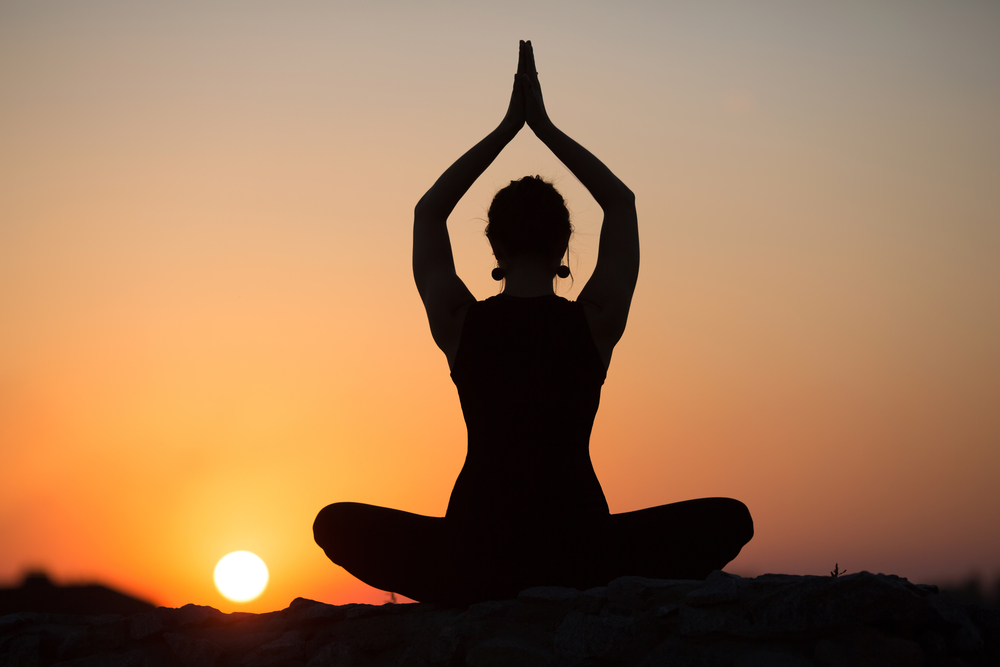
Finding Your Calm: The Power of Yoga to Deal with All the Everyday Stresses and Inner Turmoil.
Namaste, dear readers.
Take a moment. Right now. No matter where you are you may be sitting up at an untidy desk in an overcrowded city, or you may be lying on a sofa and your head simply will not quit turning we want you to do something. Relax your jaw. Shoulder away without your ears. Unclench your hands.
Anxiety that we feel every day is like a heavy load that we carry as an invisible backpack in our modern world. We have grown so accustomed to the weight that we no longer have the capacity to lay it down. Being yoga practitioners in the spiritual center of India, we have witnessed thousands of yoga practitioners come to our yoga retreat in Rishikesh with that telltale “inner restlessness”. They are weary of their eyes, shallow in their breathing, and stiff in their bodies, in a perpetual doing. Over the years, at Maa Shakti Yog, we have quietly held space for seekers arriving with this same inner restlessness, guiding them back toward steadiness and breath.
That is the beauty of yoga; yoga is a way of taking the way of doing back to being. In this day and age, we will explore how the age-old wisdom of yoga against anxiety can assist you to wade through the turbulent waters of the modern mind and find a stable position against yourself.
Realizing the Sources of Inner Restlessness.
We need to know what we are dealing with before we roll out the mat. Being restless inside is not merely a mood, but it is a condition. The sympathetic nervous system responds with fight or flight when we get stressed. Cortisol and adrenaline rush into the system, and we are ready to run away from a predator that is not present. Being unable to fight with a physical beast, this energy remains imprisoned in our body and in our minds and appears as jitters, thoughts racing through our head, and a feeling of something dreadful about to happen.
Yoga and mindfulness come in here to offer some sort of biological hacking. Through special postures, breathing, and mindfulness, we can directly talk to the vagus nerve, the nerve of the nervous system, to signify that the danger is over.
The Science of Yoga: How It Works against Anxiety.
A lot of people tell us, “Is it only the exercise that ultimately causes me to feel better? Although physical activity is useful, the magic of yoga in relation to mental health is far more significant.
- Balancing the HPA Axis: Yoga would help in regulating the Hypothalamic-Pituitary-Adrenal (HPA) axis that regulates your hormonal reactions to stress. Frequent training reduces the levels of cortisol, and you become less sensitive to daily stress.
- Neuroplasticity: with the help of meditation and yoga, we literally restructure our brains. We reinforce the prefrontal cortex (the rational and calm part of the brain), and we weaken the amygdala (the fear center of our brain).
- Vagal Tone: The deep breathing is yogic and enhances the vagal tone. Having a high vagal tone is an indicator that your body is able to relax sooner than the stressful event.
Major yoga pillars that can be used to cope with stress.
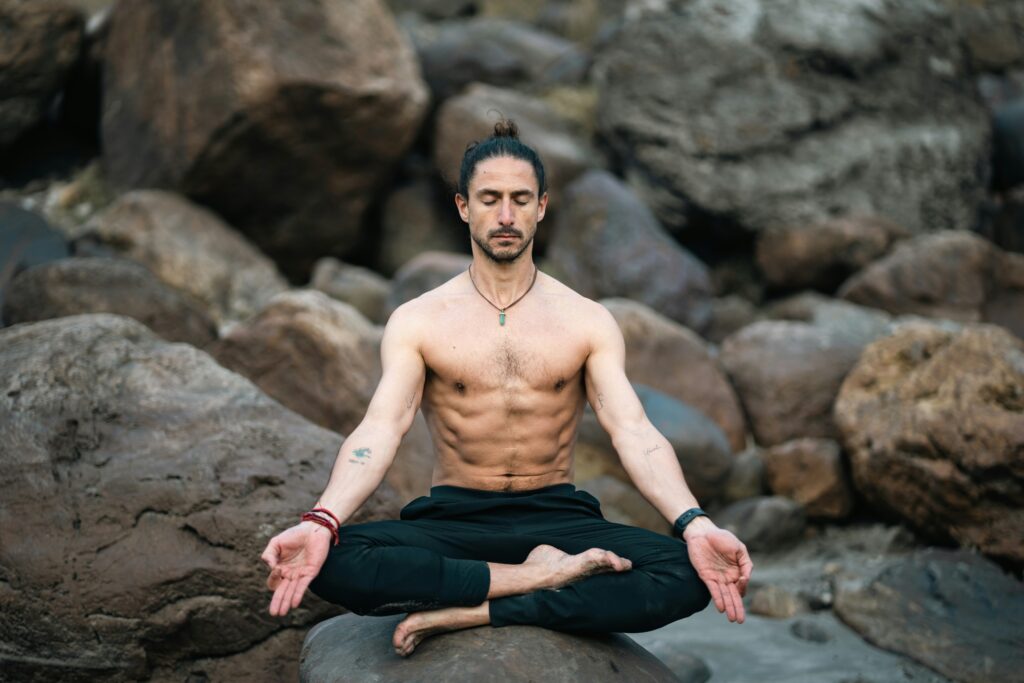
Also Read: Mudras: The Forgotten Yogic Language of Energy
You do not even have to learn how to do a headstand in order to find natural methods of coping with stress. You must learn these three pillars:
1. Pranayama: The Breath Science.
“Prana” in Sanskrit translates as “life power,” and “ayama” as “extension.” By controlling your breath, you are also in control of your mind. For day-to-day anxiety, we will definitely suggest Nadi Shodhana (Alternate Nostril Breathing).
How to do it: Use the thumb to close one nostril (right) and inhale with the other one (left). Touch the left one with the ring finger and breathe out with the right. It is a practice that brings balance to both sides of the brain, left and right, to produce what is close to a sense of balance almost instantly.
2. Asana: Constraining the Restless Energy.
When we have the flighty mind, we handle it with the body. Standing poses and forward bends are also necessary in controlling inner restlessness.
- Vrikshasana (Tree Pose): This involves a lot of concentration. You cannot fret about your mortgage and stand on one foot! It drives the mind to the here and now.
- Uttanasana (Standing Forward Fold): In bringing your heart to a position below your head, you literally relax the nervous system and give the blood of the brain a cooling effect on the psyche.
3. Dhyana: The Art of Stillness
Mindfulness meditation is an exercise of being an observer. You are not in the storm of your thoughts but have the rain fall on the porch. You know that you are not anxious but a person who is anxious. This change of attitude is the secret of the anxiety relief in the long run.
Establishing a Sacred Place: Why Rishikesh Matters.
People come in and out of the world to study yoga in Rishikesh, and there is a deeper motive. This land is referred to as the Yoga Capital of the World, and it is endowed with a certain vibration. Seated on the banks of the Holy Ganges (Maa Ganga), in the emerald foothills of the Himalayas, your nervous system starts to slow the minute you land.
In our yoga center in Rishikesh, we stress the fact that yoga is not an exercise; it is a work-in. Factors such as the ringing of temple bells, the smell of Himalayan cedar, and the existence of actualized masters in this place make the healing process faster. When you go and do some Hatha Yoga in Rishikesh, you are not merely stretching your limbs, but you are engaging in a millenniums-old tradition of peace.
An All-Round Yoga Program to Counteract Anxiety.
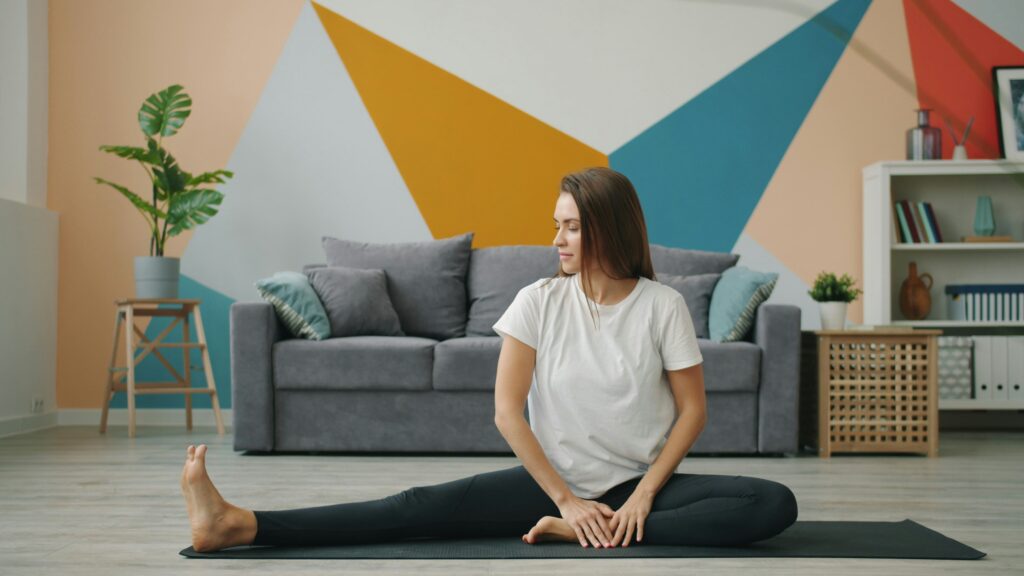
Also Read: The Sound of Stillness: The use of silence in yoga.
When you are struggling today, use this 20-minute sequence. You do not have to have fancy equipment; you only need a quiet place.
- Balasana (Child Pose) – 3 Minutes: Begin here. Give your forehead the mat. The pose represents submission. May the earth bear the burden of your thoughts.
- Marjaryasana-Bitilasana (Cat-Cow) – 2 Minutes: Rub-a-dub. Breathe in as you toss your head up, and breathe out as you turn your back around. This is the discharging of the armor that we acquire in our spinal column when we are stressed.
- Adho Mukha Svanasana (Downward-Facing Dog) – 2 Minutes: This inversion is beneficial to change your mindset and stretch the whole back body, where we tend to accumulate restless energy.
- Paschimottanasana (Seated Forward Bend) – 3 Minutes: It is a very deep meditation posture. It draws the body inwards, forming a cocoon of silence.
- Viparita Karani (Legs-Up-The-Wall) – 5 Minutes: This is the pose that you should do when you have little time. It is the eventual remedy to internal discomfort. It relieves leg tensions and decreases the heart rate.
- Savasana (Corpse Pose) – 5 Minutes: Do not omit! It is at this point that the integration occurs. Lie down, palms up, and do nothing.
Beyond the Mat: An invitation to take yoga with you into your day.
Yoga does not stop when you put back your mat. In order to actually cope with the anxiety of everyday life, you have to consider these principles in your life:
- The 5-Breath Rule: When you are experiencing a spike of restlessness, whether it is during a challenging meeting or a traffic jam, you should take five mindful, deep breaths. It prevents the anxiety cycle before it gets out of control.
- Mindful Eating: Mind your food: Dine and pay attention to the texture and taste of your food. This is to keep you in the physical world as opposed to the mind movie of concerns.
- Digital Detox: We usually invite students to switch off in Rishikesh. The brains are always on high alert due to constant notifications. Defend against your technology to keep inner harmony.
Discovery: On the Goal of Meditation.
Anxiety is like a cloud. It can be black, it can be big, and it can shut out the sun here and there but the sun persists. You are the sky, not the clouds.
By practicing yoga as a way of inner peace, you get to know that you have a sanctuary within yourself and nothing in the outside world can reach it. You can come have a yoga teacher training with us in Rishikesh or just work and practice in the comfort of your home, but no matter what you do, just keep in mind that each breath is a fresh beginning.
Yoga is a thousand miles long, although it starts with one breath. You are not as weak as you have been thinking, and you should have a peaceful life.