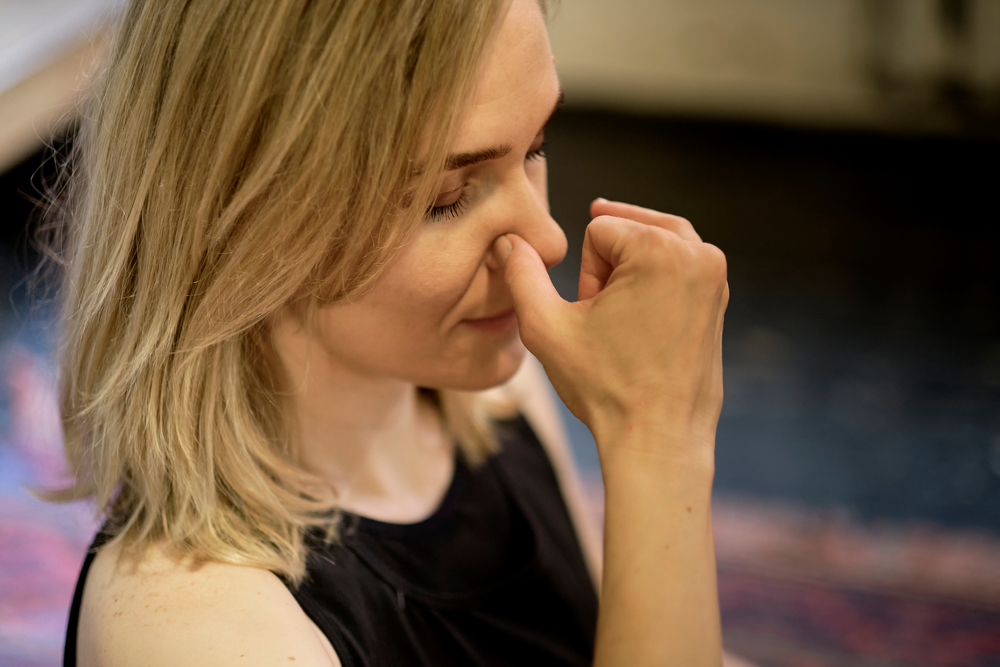
How to Find a Balance of Your Inner Energy: A Beginner Level Guide to Nadi Shodhana Pranayama.
Namaste, friends!
Experienced that your head was a browser with fifty tabs open? Found yourself not quite yourself, but you didn’t know why? You are not alone. Generally, we discuss the flow of prana—the vital life force in the heart of Rishikesh, the yoga capital of the world. Today, we would like to sit with you and discuss one of the most transformational and simple tools of the yogic arsenal, Nadi Shodhana, or Alternate Nostril Breathing.
This is your secret weapon whether you are walking with the Ganges or sitting in some corner of your home, and instantly you will find peace. Now let us explore how you can master this technique, why it is so powerful, and when it is best to practice this technique.
What is Nadi Shodhana?
We need to examine the name first to get to know the technique. “Nadi” means “channel” or “flow” in Sanskrit, and “Shodhana” means “purification” or “cleansing.”
Ancient yogic texts say that thousands of such nadis, or energy channels, exist in our bodies. The three more significant ones are
- Ida Nadi: The left channel is associated with cooling energy and the creative, intuitive half of the brain.
- Pingala Nadi: This is the right channel, which is associated with the sun, heat energy, and the logical analytical part of the brain.
- Sushumna Nadi: This is the central channel that runs down the spine.
As long as we have our energy stagnated in one or the other side, we feel either lazy (too much Ida) or nervous and hot-blooded (too much Pingala). The advantages of Nadi Shodhana include balancing these two hemispheres, de-contaminating the mind, and bringing it to a state of deeeeeeeep meditation.
Nadi Shodhana: The Step-by-Step Guide to Nadi Shodhana.

Don’t worry about being a “pro.” Alternate nostril breathing is really beautiful because anybody can do it. To have a peaceful session, follow the following steps:
1. Find Your Seat
Sit comfortably. It may be Sukhasana (Easy Pose) on a yoga mat or even sitting in a chair with feet even to the floor. Maintain a straight but loose posture. Just suppose there was a thread, and it was pulling your crown of head to the sky.
2. The Gesture of the Hand (Vishnu Mudra).
Place the left hand on the left knee. Thumb and index fingers—using your right hand, fold them towards your palm. Your thumb will be used to close the right nostril and your ring finger to close the left one.
3. The Breathing Cycle
- Breath In and Out: Inhale prior to beginning by washing your lungs with a deep breath using both nostrils.
- Left Breathing: Close the right nostril with the thumb. Breathe slowly and deeply by the left nostril.
- Switch: With your ring finger, keep the left nostril closed and free the right one.
- Exhale Right: Slow deep breath out the right.
- Inhale Right: Leave the left one closed and breathe in on the right side.
- Switch: Right thumb close and left thumb release.
- exhaled on the left breath out on the left.
That is one full round. Attempt to balance the duration of your breaths out and breathing. When you breathe in four times, see whether you can breathe out four times.
Why Should You Do It? The Science-Backed Benefits
We find people of all ages, and this is what they use to reset their nervous system in the world of yoga in Rishikesh. This is why Nadi Shodhana is a health changer:
Lowering Stress and Anxiety
Slowing the breath and attending to the rhythm sends a message to your brain to switch out of the fight-or-flight mode to the rest-and-digest mode (parasympathetic nervous system). It is the kind of natural tranquilizer.
Improving Brain Function
The fact that you are switching nostrils is in effect bifurcating the brain. This helps in coordination, better concentration, and even gives you some creativity inspiration when you are in a rut.
Respiratory Health
It assists in clearing the breathing tracts. On the one hand, it is not a cure for allergies, but with practice, you will be able to breathe better, and as the years pass, you will be able to expand your lung capacity.
Detoxification
This is done by ensuring a deep, slow flow of oxygen and a full breath out of carbon dioxide so that you are helping to get your blood oxygenating better and helping the body to get rid of toxins.
Finding the Perfect Timing
Everything with Pranayama is timing. Although one can technically employ this any time one is stressed, here is the standard wisdom regarding the timing of Nadi Shodhana:
- The Golden Hour (Brahma Muhurta): It is early in the morning, preferably before sunrise. The air is clean, and your head has not been overloaded with the emails of the day and the tasks of the day.
- Prior to Meditation: In case you cannot sit down and meditate, do 5-10 rounds of Nadi Shodhana. It functions like a bridge, and the mind of the monkey is pacified, making you go further into silence.
- Before Bed: In case of insomnia, it is a good idea to practice it with a very slow, gentle rhythm in preparation for sleep.
- Empty Stomach: Never eat something before practicing; you will always find it easier practicing on an empty stomach. Full belly diaphragmatic breathing may be uncomfortable and distracting.
Basic Advice that Newcomers Should Follow.

In case you have only begun practicing yoga and pranayama, these are some of the tips that you can keep in mind:
- Do Not Force It: In case you have a cold and your nose is stuffed up, do not do it. The breath must not be pushed but must be a thread of soft silk going in and out like a vacuum cleaner!
- Relax Your Face: Scrunch your jaw and forehead. Novices strain their faces in an attempt to focus. Let your face be soft.
- Start Small: Start with 5 rounds only. When you become comfortable, you can practice for 5 or 10 minutes.
- Consistency rather than Intensity: 2 minutes a day is far more important than 20 minutes a week.
Finding the Spirit of Rishikesh in Your Practice.
In Rishikesh, one can feel the power of the energy of thousands of years of seekers. You are not merely doing a breathing exercise when you practice Nadi Shodhana, but a living tradition.
When you get the opportunity to go there, you will see people exercising along the ghats, the river sound giving them a natural rhythm with which to move their breath. The elegance of this is, however, that the Ganges also is there in you. The flow of peace that you are creating by balancing your nadis can be applied to your work, your relationships, and your daily life.
Final Thoughts
At Maa Shakti Yog, we believe balance isn’t something you find, it’s something you practice daily. We are constantly being told to do more, do it faster, and be louder. In a world that never gives us the opportunity to pause, to take ten minutes and just breathe in one nostril at a time is a radical act of self-care.
It is easy, it is free, and it is extremely good. Why not have a go now, then? Close your eyes, make your Vishnu mudra, and then give that first great breath in with the left. You could never imagine how much better you would feel on the other side.
Happy breathing, and Namaste!
The Major Lessons in Your Practice:
| Feature | Description |
| Primary Goal | Purify energy channels (Nadis) and balance the brain. |
| Best Mudra | Vishnu Mudra (Right hand). |
| Ideal Duration | 5-10 rounds or 5-10 minutes. |
| Best Location | A quiet, well-ventilated space (like a garden or clean room). |