The Ocean in Your Throat: A Guide to Ujjayi Breath.
Namaste, friends! When you have ever entered a yoga studio and wondered as to why everyone has suddenly become Darth Vader or the soothing sound of the ocean, you have just happened to discover one of the most phenomenal secrets of the practice: Ujjayi Breath. At Maa Shakti Yog, we often teach students that mastering the breath is the real gateway to mastering yoga.
Practicing here in the so-called Yoga Capital of the World, Rishikesh, we find something magical in the sound of the group breathing of Ujjayi resounding with the background of the running Ganges. It is not just a yoga sound but also effective physical stamina and mental acuity.
Today, we will explore the meaning and use of Ujjayi Breath in detail, why it is a fundamental practice of both Vinyasa and Ashtanga yoga, and how to learn how to use it at home.
What is Ujjayi Breath? (The “Victorious Breath”)
Ujjayi (oo-jai) is a term that derives directly from the Sanskrit prefix ud (upwards) and jaya (victory or conquest). It has commonly been translated as the Breath of the Victorious One.
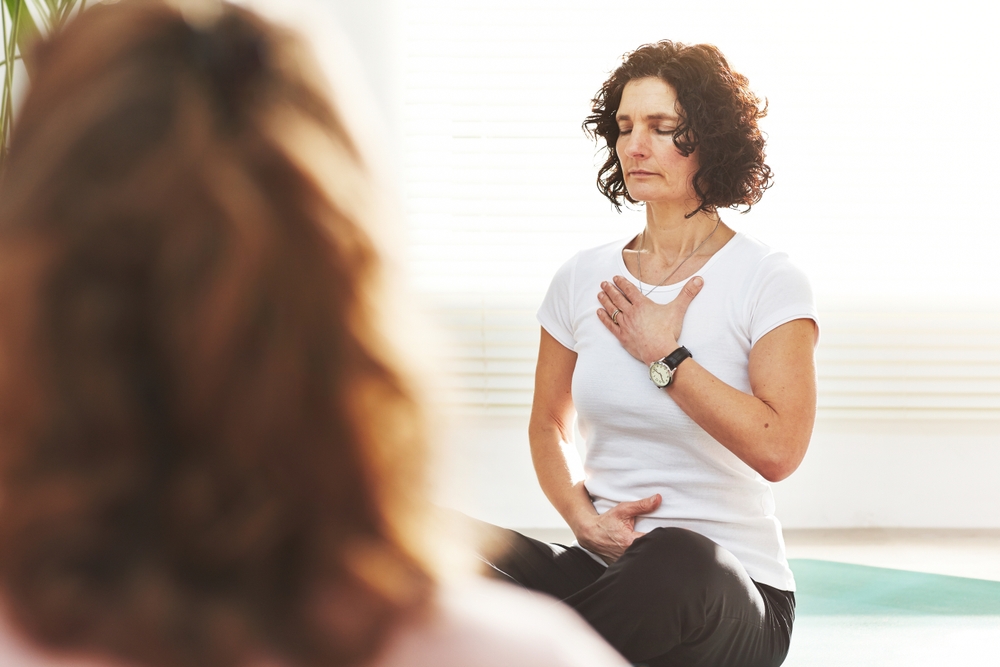
Most of us inhale mindlessly in the daily course of things, but Ujjayi is a conscious diaphragmatic breath. The distinctive feature of this technique is a very narrowing at the back of the throat (the glottis) that makes a soft-sounding friction when inhaling and exhaling through the nose.
Think of it like this:
- It is the same thing you do when you fog a mirror or a pair of glasses.
- The only difference? You keep your mouth closed.
The Science and Purpose: What Is the Purpose of Using Science?
Also Read: The Five Sheaths of the Soul: Understanding Pancha Kosha
You may be wondering, “I know how to breathe already.” Why make it complicated?” Now, Ujjayi has a number of essential purposes in the context of Pranayama (breath control), which transforms a mere physical training into an emotional meditation.
1. Internal Heat Building (Agni)
Ujjayi is commonly referred to as the breath of the mind. The internal heat is the result of the friction of the air that enters the narrowed throat. We tap into this heat in the moist, spiritual atmosphere of Rishikesh yoga retreats to cleanse the body and release toxins into the body through sweating and enhancement of circulation.
2. Control of the Nervous System.
Ujjayi is created to be relaxing even though its sound is powerful. It extends the breath and activates the vagus nerve, thereby telling your brain that you are safe. This will aid you in remaining composed even when you are in a pose that is challenging, such as Chaturanga or deep pigeon.
3. Focus and Presence (Dharana)
The resonance of the breath performs the function of an anchor. The mind in yoga is fond of going to see what you are going to eat or that mail you had not written. The sound of Ujjayi provides your mind with something to concentrate on so that you will be anchored to the present.
4. Oxygenation and Heart Rate Control.
You run a risk of slowing down your breathing by simply constricting the air passage. This enables further exchange of oxygen and carbon dioxide and keeps your heart rate constant on vigorous flows.
Ujjayi Breath: How to Do It in a Step-by-Step Guide.
You are an amateur; you need not fret! With some practice the sweet spot where the sound is audible without being strained can be located.
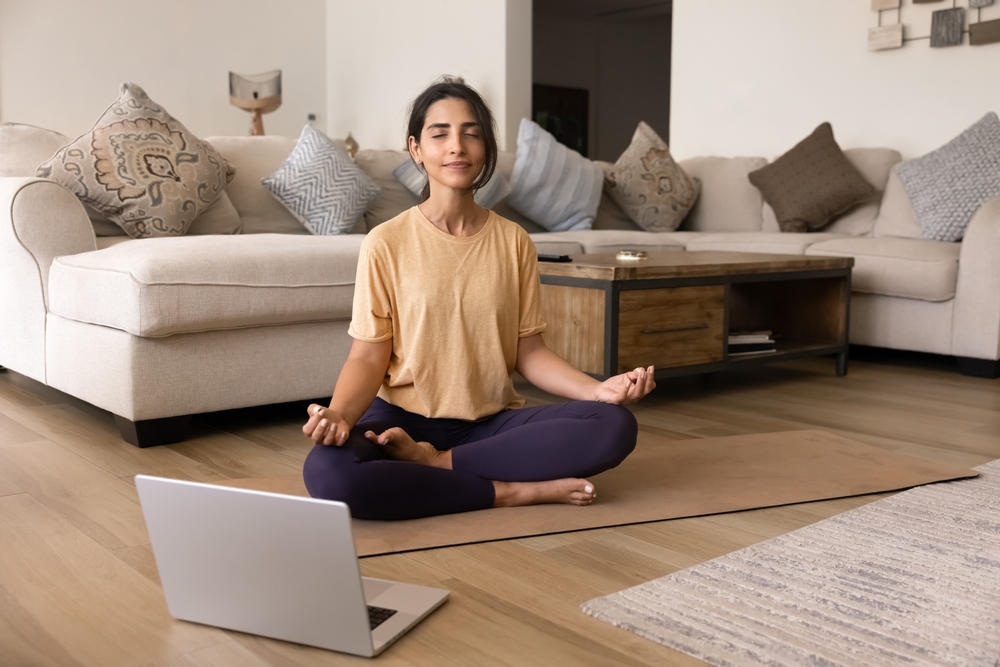
- Get a Comfortable Seat: Sit straight and in a straight position. Shoulders: Relax your shoulders away.
- The Fog the Mirror Trick: Open your mouth and blow it like you are fogging a window, and say HAAA.
- Close the Mouth: Halfway up the next inhalation, you just close your lips, keeping that same circular form at the back of the throat. You are supposed to hear hissing, or the ocean, through your nose.
- The Inhale: You have mastered the exhale; now attempt to replicate that same constriction on the inhale. It may be as though you were sucking the air in through a straw.
- Feel the Beat: The goal here is to have a steady duration of both the breathing-in and the breathing-out.
- Instructor’s Hint: When your throat begins to scratch or feel sore, you are tightening it too tightly. It must be a soft “whisper” and not a kind of growl!
Practice: Inviting Ujjayi to Your Bed.
Also Read: Mudras: The Forgotten Yogic Language of Energy
One thing is knowing how to do it, and another is applying it in a 90-minute Vinyasa flow. The following is the application of Ujjayi:
In Sun Salutations (Surya Namaskar)
The movement is to be guided by the breath. Every motion is wedded to a breath. As an illustration, when you bring your arms closer to your chest (inhale), you can hear the Ujjayi sound. The same texture should be present as you fold forward (exhale). This forms a rhythmic and hypnotic beat.
In Balancing Poses
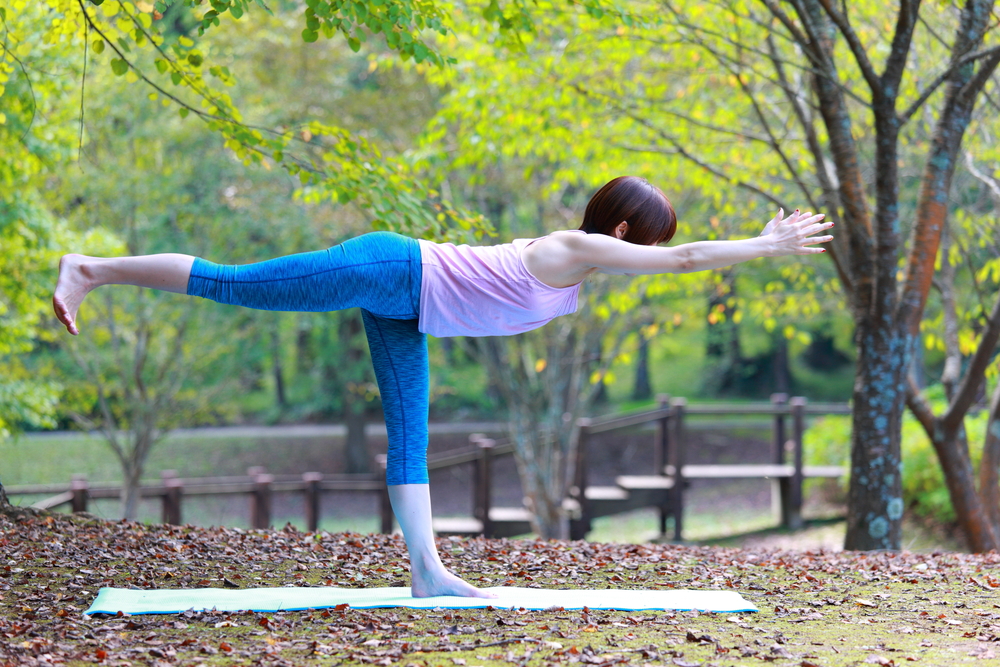
Your breath tends to either stop or go shallow when you are in Tree Pose or Warrior III and are wobbling. This is the fight-or-flight response. You reduce your center of gravity (mentally) when going back to a steady Ujjayi breath and regain balance.
When doing Yin Yoga or Restorative Yoga.
Although Ujjayi is regarded as power yoga, a very tender form of it may be applied in the more profound bends to assist the muscles in being relaxed and melting into the floor.
Ujjayi in Rishikesh: The Spiritual Relationship.
Also Read: Morning vs. Evening Yoga Practice: What Suits You Best?
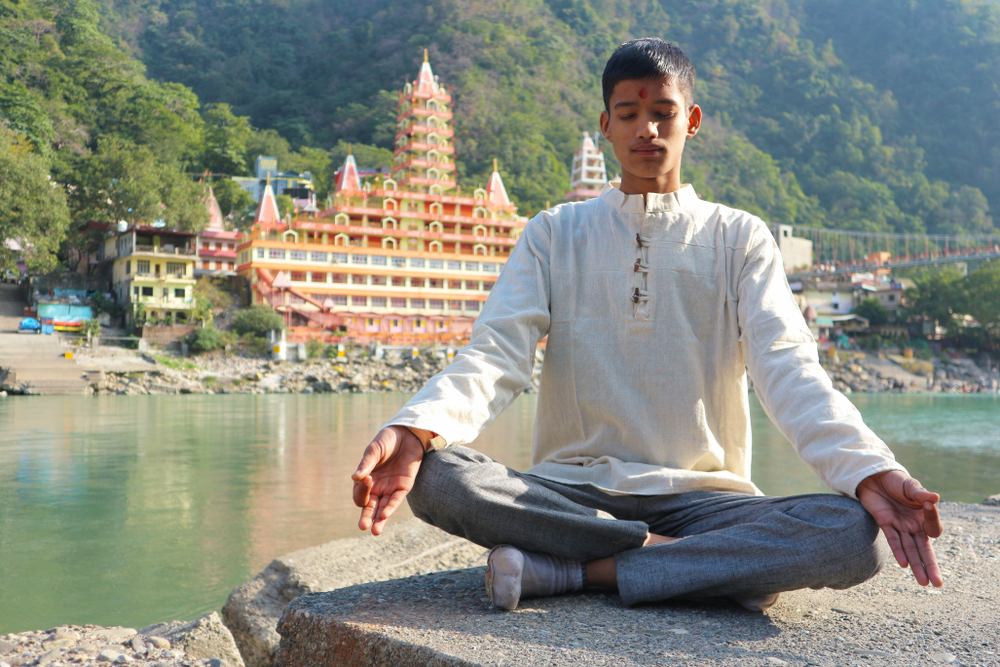
Yoga is regarded in Rishikesh as a way to a union. The connection between the physical body (Annamaya Kosha) and the energetic body (Pranamaya Kosha) is the ujjayi. As we breathe in this manner, as we walk along the banks of the Ganges, we are reminded that breath is the prana, or force of life, which is related to us to the universe.
Ujjayi is thought by many practitioners to assist them in entering a fluid state faster. It transforms an outside workout into an in-house prayer.
Common Mistakes to Avoid
- Forcing the Sound: It is not to be so loud that the person sitting in the back of the room can hear (unless you are trying hard!). It’s primarily for your ears.
- Jaw Clenching: You have to keep your face, jaw, and tongue loose. Jaw tension usually causes tension of the hips.
- Holding the Breath: When you happen to be holding your breath in an uncomfortable pose, you have no longer got the Ujjayi. Take a little step backward from the pose till you feel like breathing again.
Summary Table: Ujjayi in the Glance.
| Feature | Description |
| Sanskrit Meaning | Victorious Breath |
| Sound | Like ocean waves or a soft “hiss” |
| Primary Benefit | Builds internal heat and focuses the mind |
| Best Used For | Vinyasa, Ashtanga, and maintaining calm in stress |
| Key Technique | Slight constriction of the glottis (throat) |
Final Thoughts
Your best assistant on the mat is the Ujjayi breath. It reminds you when you are working too hard and helps you when you need encouragement. It does not matter whether it is in a posh studio or on the rocky beach at Rishikesh; the breath is the one thing you can carry along.
The next time you roll out your mat, do not merely roll out your body, but do it with a purpose to breathe. Hear you the ocean in yourself. You will see the “victory” in Ujjayi has nothing to do with learning how to assume a difficult posture; it has to do with learning how to control your own mind by learning the power of the breath.
Are you willing to intensify your practice? To be able to get down and dirty in these old methods, there is no better place than the very center of India.