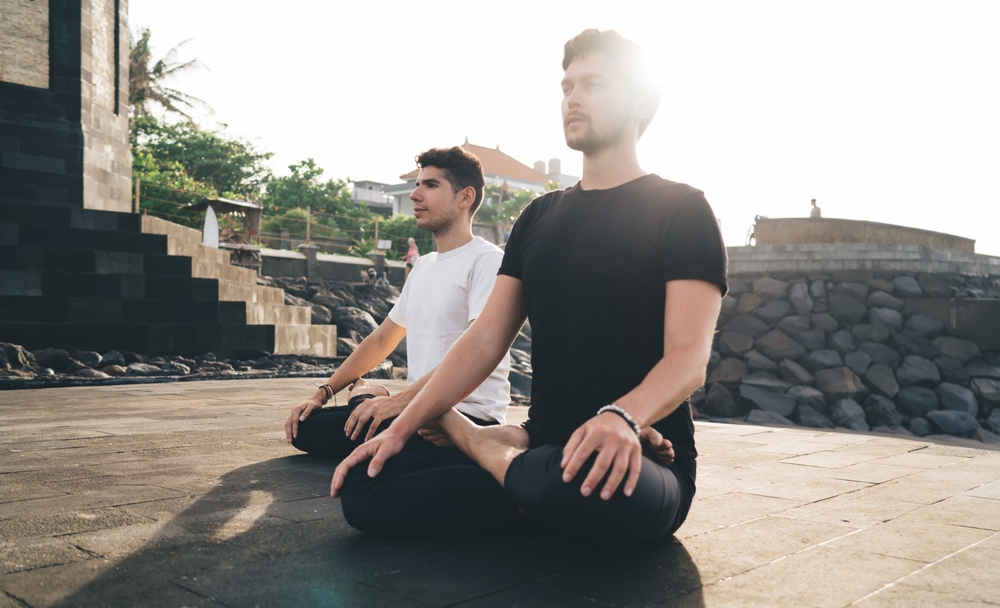
The Sound of Stillness: The use of silence in yoga.
Namaste and a very warm welcome to every one of us fellow seekers and practitioners.
When you have been in the colorful streets of Rishikesh, you can easily imagine that the word “silence” is not the first thing that you can think of. This city is a symphony of life, between the rhythmic yelling of the temples, the soft jingling of the cowbells, the roar of the mighty Ganga, and the humming of the people of all nations in the world. However, it is here, in the Yoga Capital of the World, where we can really start to comprehend the deepest aspect of what we are doing: the place of silence.
In the contemporary world we live in, we are taught to be afraid of silence. We also spend all our idle time on social media, with a podcast in our ear or background music. We usually take that noise with us even to the yoga mats. However, as we move further into yoga and meditation, we begin to see that the most valuable dialogues we will ever have are not verbal ones that we speak aloud but rather occur in the silent room that we create inside of ourselves.
Today we are going to explore the reasons why silence is the secret ingredient to a transformative yoga practice and how you can develop it, whether you are practicing in a quiet Rishikesh yoga ashram or in your living room at home.
What is Mauna? The Ancient Art of Silence
The tradition of yoga views silence not as the lack of sound, but as a serious spiritual discipline called Mauna.
In the yoga practice when we speak of Mauna, we are not simply speaking of not talking. In fact, there are two levels to this:
- Vang Mauna (Silence of Speech): This is the bodily nonverbal behavior of not speaking. It conserves the amount of energy that we normally use in communicating with others and turns it back.
- Mano Mauna (Silence of Mind): It is the goal of the inmost. It is the condition in which the habitual ratclatter of thoughts, the judgments, the planning, the worrying, etc., starts to calm.
The sages in the ancient writings of India would make vows of silence to spend several years of their lives in order to reach a state of self-realization. Although we may not be ready to commit to the one-year vow, we can incorporate the spirit of Mauna in our day-to-day asana sessions. By making the decision not to talk, we cut the output and begin the input. We cease to inform the world of who we are and begin to hear ourselves come to be actually who we are at this very moment.
The Importance of Silence in Your Yoga.
Also Read – The 8 Limbs of Yoga: A Holistic Path to Inner Peace, Clarity, and Spiritual Growth.
So why do we have so much silence in our teaching here at Rishikesh? It is because silence is a reflector. In the absence of the outside world, we have no choice but to examine the inner world.
1. Expanding the Mind-Body Relationship.
When we are doing yoga poses (asanas) in a crowded place or listening to loud music, we tend to divide attention. We may be in motion, but are we experiencing?
By being silent we can observe the little things about our alignment. We can tell how we breathe—jagged or smooth? We are able to sense the fine movement of our muscles. It is this increased awareness that will turn a mere physical workout into a yoga meditation. We are simply doing yoga without silence and being yoga with silence.
2. Calming the Nervous System
Scientifically, there is constant noise, which puts our brain in the high alert state. It stimulates the sympathetic nervous system (our fight-or-flight response). Our minds receive the message that we are safe by intentionally opting to be still and quiet.
This triggers the parasympathetic nervous system, which enables slowing of the heart rate and decrease in the level of cortisol in our body. This is what is meant by the fact that you tend to experience a strong feeling of deep release during a silent class that you may not experience during a power yoga session where music is playing.
3. Development of Pratyahara (Withdrawal of Senses)
The fifth limb of yoga in the Eight Limbs of Yoga by Patanjali is Pratyahara—withdrawal of senses. The entrance to this stage is silence. We attract our energy (prana) inwards by reducing the amount of the outside world that we are exposed to. It is the transition between the physical aspect of asana and the more profound meditation and dhyana.
Rishikesh Experience: Discovering Stillness in the Noise.
Thousands of practitioners are drawn to Rishikesh every year; this is why. Here is a certain Spanda—a holy vibration.
The reason why we frequently inform our students that they should practice yoga in Rishikesh is that it is the only place where they learn about silence from the surrounding environment. When you are sitting on the white sands of the Ganga at 5:00 AM, the world is literally silent, but the river is noisy. But that sound of nature never distracts you; it draws you more deeply into your inner silence.
The mountains (the Himalayas) are gigantic silent spectators of our practice. They do not move, do not talk; they just are. When we match our practice to that mountain-like silence, we get a feeling of inner peace that would remain with us even after we get off the mat.
The Art of How to Add Silence to Your Everyday Life.
We do not have to be in any cave somewhere in the Himalayas to feel the impact of silence in yoga. The following are some of the practical methods that we would recommend you incorporate more of Mauna into your life:
- The Golden Hour of Silence: You should make the first hour of your day be quiet. Check your phone, watch TV, and watch, and, in case you live with other people, request a quiet area. This period can be used to do your morning yoga and meditation. Your day will be much more down-to-earth.
- Practice Without Music: Although a playlist can be inspirational, at least two times a week, practice in complete silence. Report whether your head becomes bored or anxious. It is a truly great instructor: this discomfort makes you know where your mind is striving to be distracted.
- Sacred Gap: Separating between yoga poses, there should be a sacred gap. Move not so fast into the next. Take three breaths in Tadasana (Mountain Pose) and simply listen to the silence following the work.
- Watch Your Talk: Do not talk before you ask yourself, is it true? Is it kind? Is it necessary? Do you think it is better than the silence? It is a lovely means of leaving your yoga on the mat and moving it into the world.
The Peak of Silence: Savasana

Also Read – The Ultimate Guide to Sleep Yoga: Bedtime Yoga to Rest Deeply.
Discussing the role of silence, we would like to refer to the most important pose of all, Savasana (Corpse Pose).
Savasana is nowadays viewed as an adjunct in most gym yoga classes: a couple of minutes of rest before running back to work. However, in a classical Rishikesh yoga practice, the Savasana is the culmination of the sessions. This traditional understanding of Savasana is preserved and emphasized at Maa Shakti Yog, where silence is treated as an essential part of healing, not an afterthought.
It is the time when you give up altogether. The demarcations of the self start fading in the utter silence of a deep Savasana. You are not doing anything; you are just watching. It is here that the curing occurs. This is where the noise of the ego is finally put aside and you are in your natural self.
Overcoming the Fear of Quiet
Silence tends to intimidate students. The inner critic becomes high when it goes quiet. You may begin to cogitate about your taxes, your relationship, or some embarrassing thing you said three years ago.
We would like to remind you: it is normal.
Silence in yoga does not aim at having an empty mind. That’s a myth! This is to become a disinterested onlooker of the noise. Sitting silently, you begin to realize that you are not what you think. The mind is where the thoughts take place.
Silence is the speech of the soul, as we put it here in the ashram. All else is poor translation.”
The Final Words of Your Journey Inward.
In your practice of yoga, we do invite you to assume that silence is not nothing, but it is something. It is an effective spiritual development, emotional healing, and mental clarity power aid.
If you want to go to a yoga teacher training in Rishikesh or just need to spend five minutes of your life without noise in a busy city, then keep in mind that the silence is always there, but it is beneath the noise. You just have to tune into it.
The following time you roll your mat, breathe in and forget about the world, and listen. There is a good deal the silence tells you.
With greetings of Rishikesh at heart.