
The Ultimate Guide to Sleep Yoga: Bedtime Yoga to Rest Deeply.
Namaste, dear readers.
It is a bet that you have had one of those nights if you are reading this. You are talking about the ones on which the pillow seems like a rock, your head is whirling through some sort of a checklist of things to do next Tuesday, and you simply can never find the spot in spite of how many times you turn the blanket on its side.
Being yoga teachers living and working in the spiritual center of Rishikesh, we have noticed that there is one uniting force between travelers and locals: we are all in an alert state. We are busy with buzzing nervous systems. However, here in the so-called “Yoga Capital of the World,” we are taught that sleep is not merely something that will occur to us but a state that we can call upon ourselves.
We would like to tell you about the magic of yoga for sleep nowadays. We will discuss the reasons your body finds it hard to sleep and examine particular yoga practices before bed, which are like a natural calming agent to the soul.
The reason why we cannot sleep (and why yoga cures it).
We are living in the age of overload of senses. In an otherwise quiet location such as Rishikesh, it is the blue glow of our phones and the internal pressure to work (be productive) that continues to place our sympathetic nervous system (the fight-or-flight response) behind the wheel.
In order to sleep, we must entrust the wheel to the parasympathetic nervous system—the rest and digest mode. The relaxation-based yoga is the best tool for this transition. Slow movement, deliberate stretching, and rhythmic breathing are some of the physical signals we are sending to the brain that the day is done and it is time to relax.
The Art of “Slowing Down”
Whenever you take a bedtime yoga routine, you are doing more than simply stretching your hamstrings. You are:
- Reducing Cortisol: The main stress hormone that is keeping you up.
- Activation of the Vagus Nerve: The major constituent of the parasympathetic nervous system.
- Controlling the Body Temperature: Light exercises followed by rest allow the body to cool down, which is a biological stimulus to sleep.
Deep Sleep: A 15-Minute Bedtime Yoga Sequence.
This does not require an elaborate studio or even a mat. It is something that you can do in bed and in your best pajamas. This sequence is aimed at taking your energy out of your head and down to the earth.
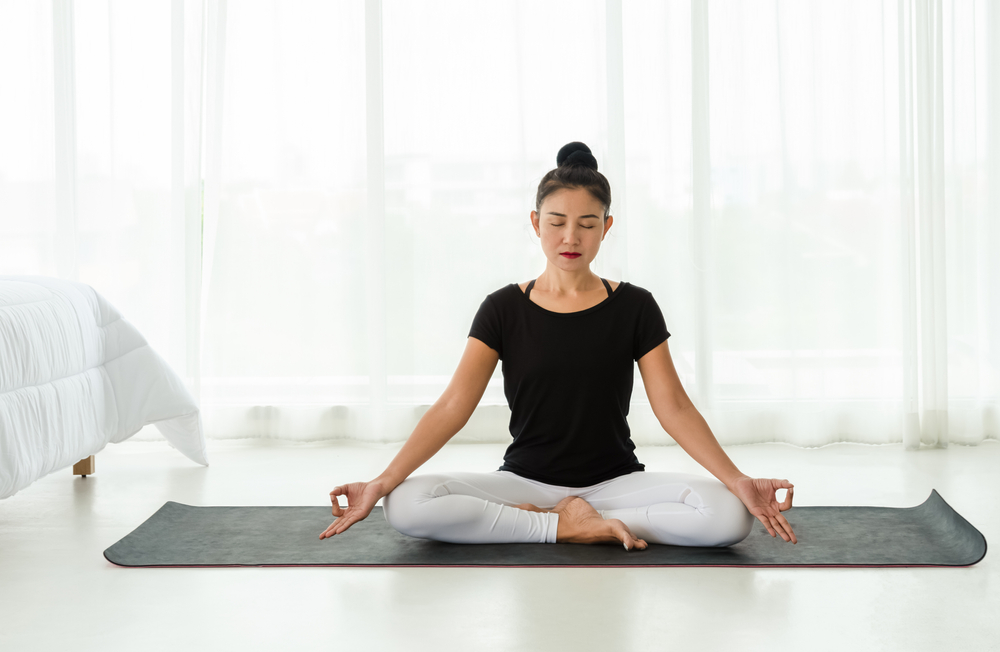
1. Seated Centering and Sukhasana (Easy Pose)
Also Read: Ready to Get Strong? Start here with these 11 yoga poses for strength.
Sit cross-legged on your bed. Close your eyes. Suppose you can hear the Ganges going by. Put a hand upon your belly and upon your heart. Breathe in 4 times and breathe out 6 times. It is the quickest method of relaxing your brain, by this “long breath out.
Time: 2 minutes.
2. Seated Side Stretch (Parsva Sukhasana).
When sitting, place your right hand over the bed and place your left arm over your ear. Breathe into your left ribs. We have a lot of stagnant air and tension on the side of the body.
Purpose: Stretches the lungs so that they breathe more deeply and more freely.
3. Kneeling Cat-Cow (Marjaryasana-Bitilasana)
Move to all fours. Breathing in, raise the sitting bones and the chest (Cow). When expiring, curl up your back like a cat (Cat).
Key Focus: This is a yoga practice of sleep since it massages the backbone of the spine and sheds off the physical burden of the day.
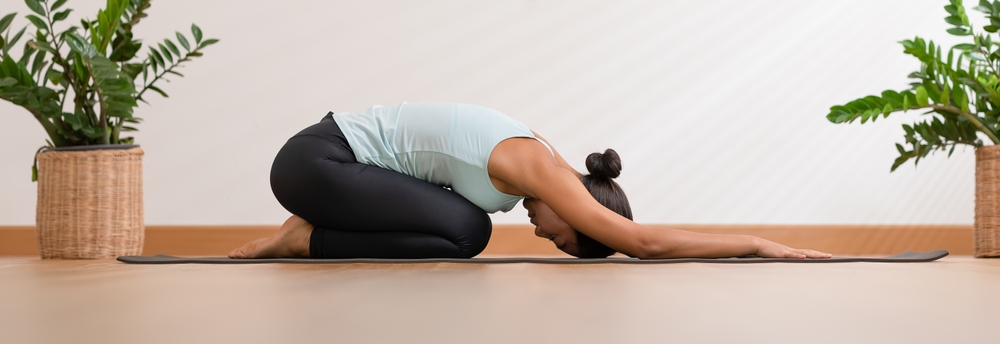
4. Sustained Child Pose (Balasana).
Also Read: 5 Breathing Techniques to Supercharge Your Yoga Practice
It is the hug of your nervous system. Use a pillow or a bolster. Sit up with wide-open knees, and bend over the pillow. Rest one cheek on the pillow.
Pro Tip: It is the ultimate yoga pose, which helps to relax. It makes your senses inwards and gives you a cocoon effect.
Time: 3-5 minutes.
5. Reclining Bound Angle (Supta Baddha Konasana)
Lean back and close the soles of your feet together and open your knees like a book. In case it is too intense, then place pillows under your knees.
Advantage: We are keeping our emotional stress in our hips. This pose gives up the “grabbing” sensation that we tend to get at the close of a stressful day.
6. Legs-Up-The-Wall (Viparita Karani)
When your bed is near the wall, then you move your hips near the wall and lie with your legs erectly against the wall. Otherwise, all you have to do is to pile a few pillows under your hips and raise your legs in the air.
The reason it works: It is the queen of bedtime yoga. It inverts blood circulation, decreases the swelling of the feet, and completely soothes the mind.
Time: 5 minutes.
7. Reclining twist (supta matsyendrasana).
Hug your knees to your breast, and drop them to the right with your eyes turned to the left.
Advantage: Twists are detoxifying. They assist in squeezing frustration out of the day, both physical and psychological.
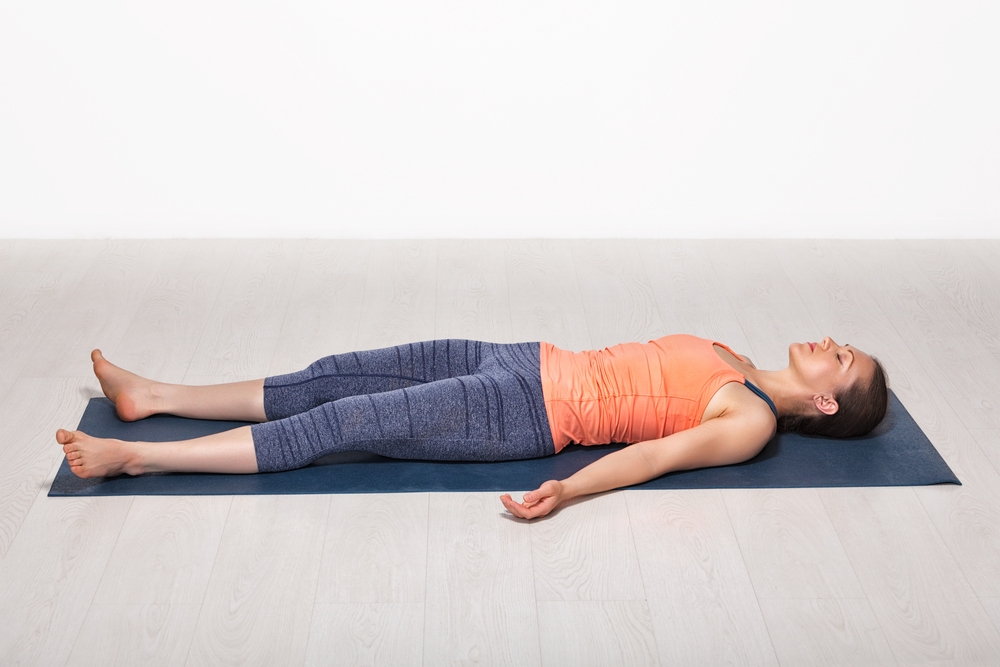
8. Savasana (Corpse Pose)
Also Read: Mantras and Chanting in Yoga: A Deep Dive
The final destination. Lie on your back, with your palms up. Wrap yourself in a blanket—a blanket makes you feel secure and heavy (proprioceptive input), which makes the brain turn off, even in a hot country like India.
The Maa Shakti Way to Create Your Sleep Sanctuary.
Here in Maa Shakti Yog Rishikesh, we feel that whatever we have around us (your Vastu) controls what is going on inside. In order to make your practice of yoga to sleep more effective, you can take into account such little changes:
- Turn off the Lights: An hour before bedtime, turn off overhead lights in favor of warm lamps or candles (safely!).
- Grab the Smell: A drop of lavender oil or a small portion of local sandalwood incense can help to put your brain in the sleep state.
- The Digital Detox: Keep your phone out of the room. The antagonist of the soul is the scroll.
- Gratitude Journaling: Once you are done with your sequence, list three grateful items. Going to sleep with a positive thought helps avoid the 3:00 AM anxiety cycle.
Why do sleep aids not work as well as yoga?
Although a pill may put you to sleep, it does not enable restful sleep. When you get up, you often feel foggy. Yoga to sleep does not oppose your biology. It also conditions your body to know when to sleep; that is, as time goes by, you will have an easier and easier time falling into sleep.
These movements are a bridge no matter where in the world you are, whether in a retreat in Rishikesh or half the world away in a big city. They are the transition between the action of the day and the reality of the night.
Final Thoughts
The last practice of self-care is sleep. It is when your body recovers, all your memories become clearer, and your soul is refreshed. When these bedtime yoga routines are integrated into your nighttime routine, you are not simply stretching; you are regaining your peace.
We would suggest you give this sequence a trial tonight. There is nothing to worry about being flexible or doing it right. You just have to breathe, move slowly, and allow the practice to shift you into your dreams.
Sometimes dream sweetly, and Namaste, on the banks of the Ganga!