
Pranayama Before Meditation: Why the Breath Comes First
Have you ever tried meditation, closed your eyes, and found your mind racing even before you started? It’s a scenario that we have all experienced. Sitting on our cushion hoping for stillness, we find our thoughts like traffic at rush hour. It is not difficult to imagine that you may be familiar with this; we have some great news: the key to a more relaxed, deeper meditation practice is not more willpower or a more exotic cushion! It’s pranayama.
As yoga teachers, we have seen this happen time and time again over the years. Anyone who practices meditation without any pranayama first finds it much more difficult. Today, we are going to discuss the importance of pranayama before meditation and how we can all benefit from using it to make every meditation sit smoother, softer, and more rewarding.
But really, what is pranayama?
Let’s start simple. “Pranayama” is not a single word; it has been made from two words and comes from the Sanskrit word “prana,” which refers to the vital energy or life force, and “ayama,” which translates to “extension” or “control.” Combined, pranayama refers to the conscious control of the breath.
Pranayama is like the steering wheel of our nervous system. Our breathing is one of the few things that we are able to control in our body, and when we work with our breathing, we can directly impact our heart rate, our stress levels, and our mental clarity. This is a pretty incredible tool to have up our sleeve when we’re about to sit down to meditate.
Why is pranayama so significant before meditation?
The thing about meditation is that it compels the mind to relax and calm. Yet our minds simply don’t seem to be working after a long day of scrolling, working, and multitasking. This is where pranayama comes in.
The breathing exercises that we do are like preparing the soil before sowing the seed for meditation. Several rounds of slow, deep breathing are messages to our nervous system that we are safe to relax. Our heart rate decreases, our shoulders relax, and our mind starts to unwind on its own. Attempting to meditate without this is akin to attempting to write a letter on a table that everybody keeps shaking.
We have experimented ourselves and with students, and we have seen that even after a few minutes of pranayama, it is that much easier to slip into the meditative state. We don’t have to wait ten minutes to deal with a noisy mind; we bypass it and get to the good part: the actual stillness.
The Breath-Mind Connection: How Pranayama Calms the Mind
Also Read: Skipping a Day of Yoga: Does It Matter?
Breath is connected to our mind in a beautiful, well-documented way. In an anxious or stressed state, our breathing is fast and shallow. If you are relaxed, you breathe slowly and deeply by yourself. The good news is that this relationship is bi-directional and can be harnessed.
Pranayama is designed to take the speed and depth of our breath to a deliberate pace and depth, and our brain takes the hint that things are okay. This helps to trigger a natural rest and digest response in the body. When we are in this state, as soon as we have found the seat and sat quietly, it’s more natural, not forced or frustrating, to meditate.
That’s why it’s important to start with the breath. This is not a warm-up session prior to the “real” practice. We are working to foster the internal space for meditation to grow and thrive.
Some basic pranayama methods to practice before meditation.
There is no need to use anything fancy. These are some simple pranayamic exercises that we regularly suggest our students are doing just prior to sitting to meditate.
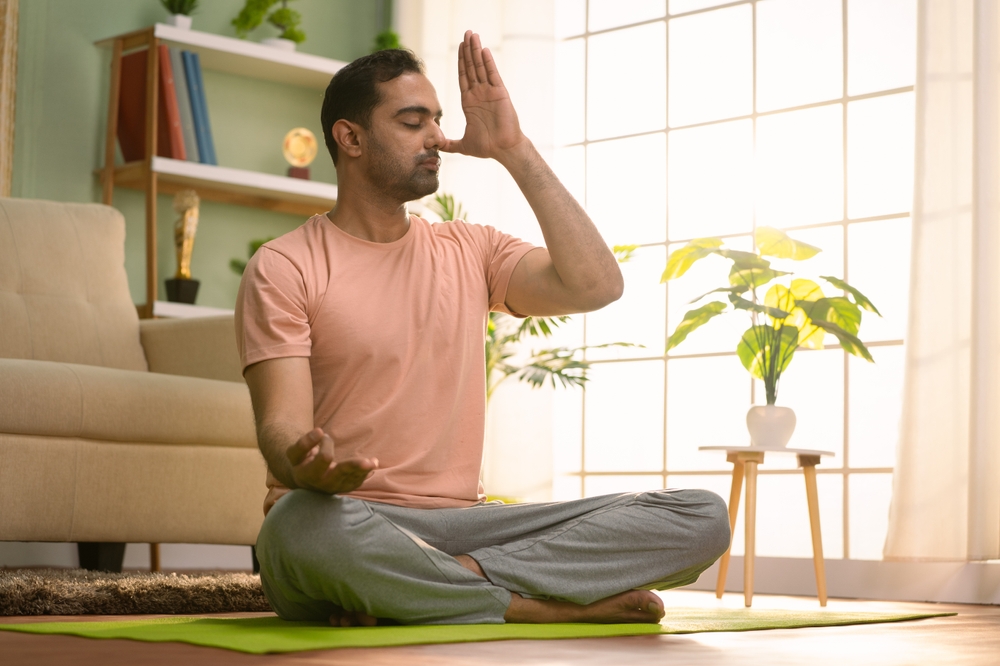
- Nadi Shodhana: Alternate nostril breathing is a balance and calming technique for both sides of the brain. We just close one nostril, breathe in, switch sides, and breathe out through the other nostril and repeat this process for several minutes.
- Ocean Breath (Ujjayi): By softly narrowing the back of the throat, we make a gentle ocean-like sound with the breath. This helps us to focus and remain in the here and now, the very place we need to be when we meditate.
- Bhramari (Humming Bee Breath): This is a popular one used by many of our students. Breathe in and out slowly and deeply, humming as you breathe out. The vibration is definitely relaxing and can help the mind to still itself in no time at all!
- Basic Deep Belly Breathing: is always our choice when we first start pranayama. A few minutes of deep, slow, belly breathing can really help us to get out of a scattered, distractive state and into a grounded one.
How to Build a Simple Pranayama Routine Before You Meditate
There’s really no need to complicate this at all. This is a basic exercise that we often recommend:
- Sitting on a chair or cushion with a long, relaxed back.
- Take a few natural breaths, just to get comfortable, eyes closed.
- Do one pranayama for about 5 minutes.
- Allow the breathing to go back to a natural state for a while.
- Gently and quietly get into the meditation practice.
It’s about consistency, not necessarily length of time here. It is always better to see somebody do five minutes of pranayama daily instead of twenty minutes once a week.
Common Mistakes to Avoid When Practicing Pranayama
Recently we were reminded about a few points we keep bringing up with our students, which can detract from the benefits of pranayama, so if we’re already discussing it, let’s mention it here.
- Forced breathing: Pranayama should be controlled and never “forced. Should we experience dizziness or shortness of breath at any time, we know to take it easy.
- Training on a full stomach: As a general guideline, it is recommended that practice take place two to three hours after eating.
- Rushing through it: The actual gains of pranayama are in the slow, mindful repetition, not in speed, nor in forcing more rounds.
- Skipping it altogether: We know that you want to get straight into meditation, but even some breathwork is a long way to go!
How many times should you practice pranayama before meditating?
It’s one of the most common questions we get asked, and there’s not one right answer! The end of the clock is more important than the end of the time because it is how we feel when we come out of it.
However, with a starting point, 5-10 minutes of pranayama is usually sufficient to see a significant change before meditation. Depending on the day, we may have to take this to fifteen minutes or perhaps only a couple of rounds of Nadi Shodhana. The end point is not a particular number but a state where our breathing is easier and our mind is quieter than when we were sitting down. When this change becomes apparent, it is time to allow the breath to settle and settle and gently move into meditation.
Bringing Pranayama and Meditation Together
Also Read: How Long Should a Yoga Session Be? The Honest Truth
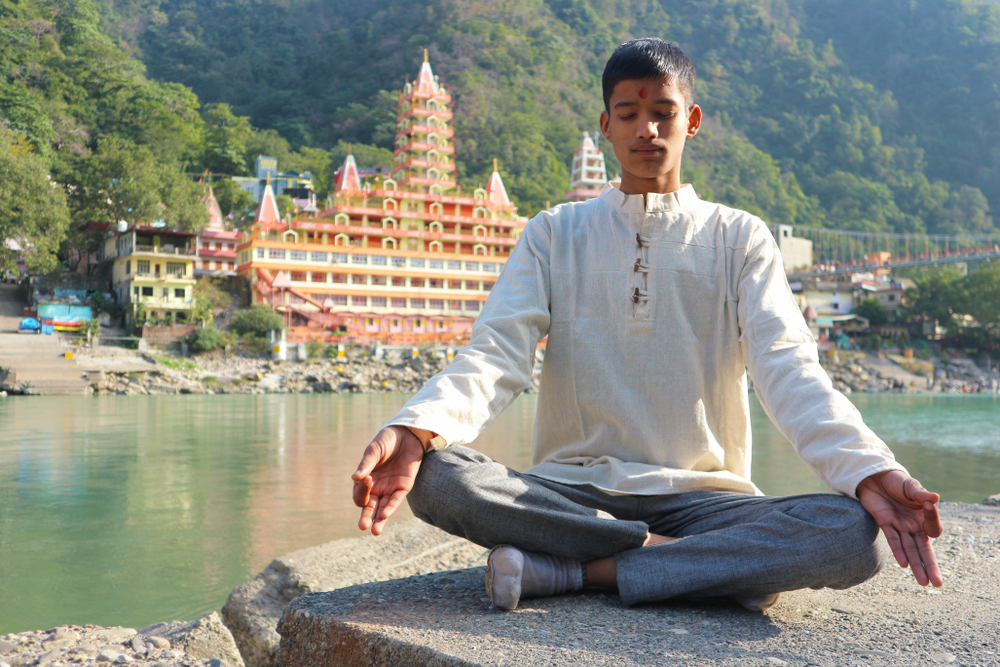
The ultimate truth is that pranayama and meditation are not really distinct practices; they’re collaborators. The breath trains the mind, and the mind trains the mind to meditate. Here in our cozy community in Rishikesh, we have seen this happen with each one of our students; those who take a few mindful breaths before meditation regularly report that their sits are deeper, calmer, and much less restless. In Rishikesh, where pranayama and meditation remain closely connected to traditional yoga practice, this understanding of the breath continues to be an important part of the wider yogic tradition represented by Maa Shakti Yog.
So next time we sit to meditate, let’s not overlook the breath. If you start with a few quiet moments of pranayama, the entire experience is altered. Let the breath be our guide, and see how readily stillness comes to meet us.
This should have helped you to understand the importance of pranayama before meditation and the fact that breathing always precedes meditation. As always, we’re cheering you on, one mindful breath at a time.