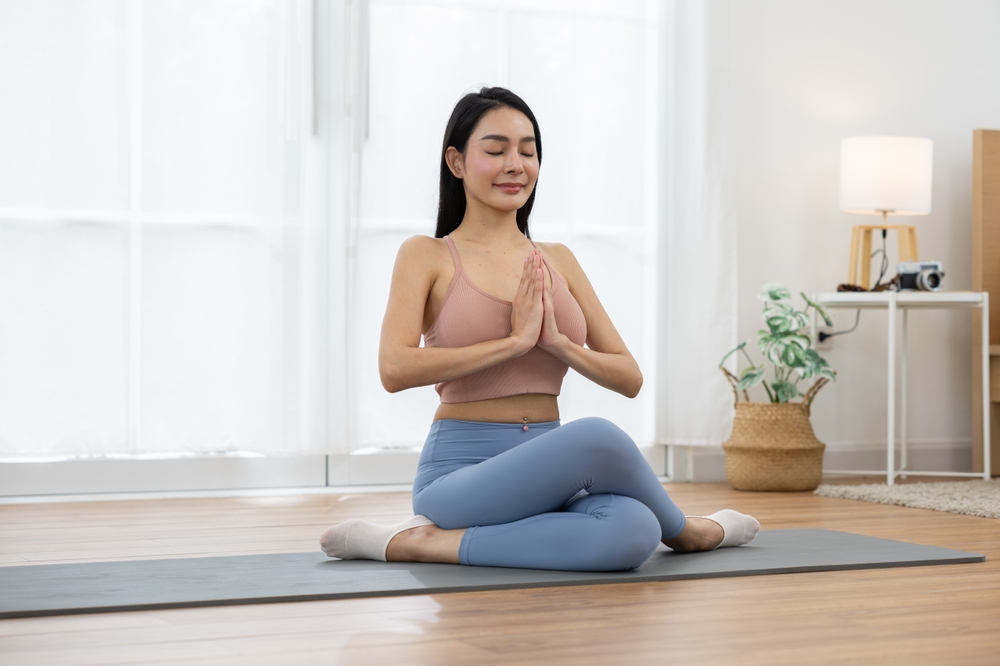
The Role of Patience in Yoga Learning
Ever gotten your yoga mat out and deep-breathed and instantly felt mad at yourself because your hands couldn’t reach your toes? Maybe you’ve seen someone do a headstand and thought, “Why does my body seem to move so slow?
We’ve all been there before. Yoga has come to be known as a place that demands a change of time zone in a world where people want instant gratification, express delivery, and quick fixes.
At the outset of our yoga practices, we start with our busy lives. We need things done right and now! If there were one thing that the ancient tradition of yoga were teaching us, it would be this: patience is the key to learning yoga.
As we continue to learn, whether in a corner of our home, or within the walls of the temple, or by the banks of the sacred Ganges here in Rishikesh, we must slow down, soften our expectations, and surrender to the present moment. This approach to learning is also central to the traditional yoga experience at Maa Shakti Yog, where patience, discipline, and consistent practice are valued alongside physical progress. Let’s just look at what change patience brings when we practice yoga and how it changes our practice from just a physical one to a journey of our souls and how we can learn to be more patient every day.
Knowing the importance of patience in yoga learning.
Patience is so important because one must first recoordinate one’s thinking about yoga. Yoga is often promoted in Western culture as a fitness program or a means to tone muscles, strengthen the core, or improve flexibility. These physical benefits are great bonuses, but they’re just the tips of the iceberg of a much more powerful discipline.
Yoga is a practice of union: the union of breath, body, and mind. It cannot be rushed to get the right physical and mental alignment. It takes time to safely open muscles, tendons, and connective tissues. Most importantly, the nervous system has to become accustomed to relaxing into new movements and postures (asanas).
If we rush the yoga learning process, we miss the subtler messages that our body is giving us. We overdo it, stretch ourselves, risk getting hurt, and lose the meditative aspect of the move. Patience is a barrier of protection. It gives us permission to celebrate our bodies where we are without requiring them to be where we think they should be sometime in the future.
Why patience in yoga practice is greater than physical flexibility.
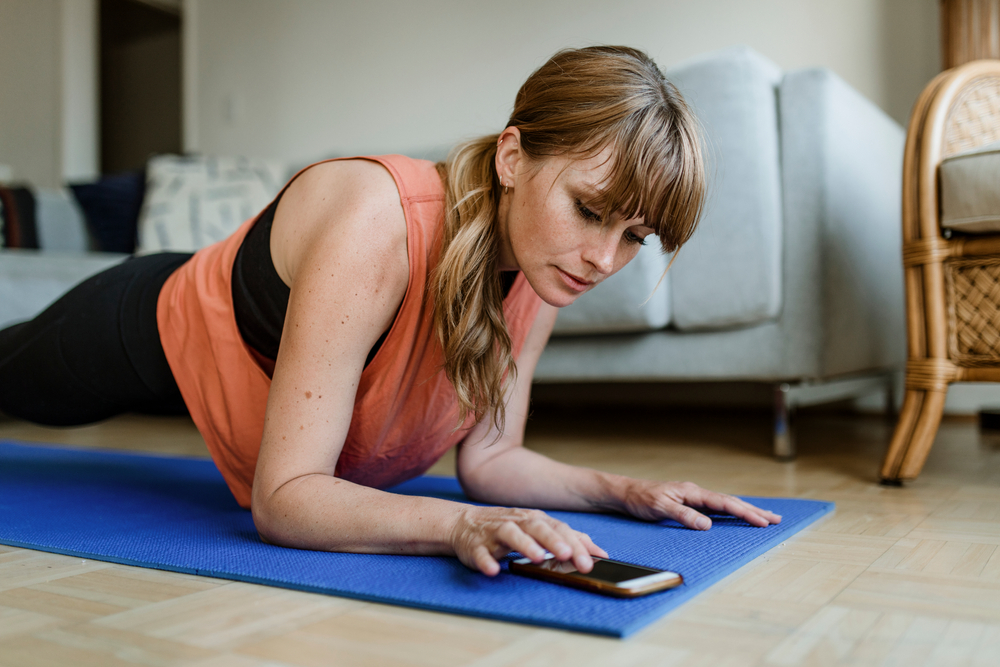
Also Read: How Long Should a Yoga Session Be? The Honest Truth
Many people who are new to yoga hear and say that they are not flexible enough to do yoga. It is one of the greatest misconceptions about the practice. As with many things, you can’t be too stiff for yoga. Yoga is not about touching your toes; it’s about what you learn on the way down.
The following is why patience in yoga practice is much more valuable than any physical flexibility:
1. This helps avoid injuries and extends life.
When we lack patience, our ego takes the driver’s seat. Push, stretch, and strain to “force” an asana. Straining or pulling ligaments or muscles can extend our practice by months. Patience helps us to learn to honor boundaries and to allow things to grow as they will over time, with the support of consistent, safe practice.
2. It remodels the nervous system.
Yoga is very much linked to the parasympathetic nervous system, in other words, the ‘rest and digest’ system. If we attend with a calm and patient attitude, our brains are given a message that we are safe. This enables the muscles to release naturally. When we rush, we put our bodies in a state of stress, triggering the “fight or flight” mechanism, and our bodies do tighten up to protect themselves.
3. It enhances mental resilience.
The challenges that we face on the mat are mini reflections of the challenges that we face in life. Practicing a difficult posture helps to teach us how to stay in the moment and calm during stressful times in our lives. Our inner anchor is our patience developed during yoga practice that is needed when life presents unexpected storms.
The greatest obstacle to progress in yoga practice is overcoming the ego.
When the hero of our yoga story is patience, the subtle antagonist is the ego (Ahamkara). The ego is looking for instant gratification, approval, and impressive pictures for social media. It is always looking at how our practice relates to the person next to us on the mat.
When ego takes control, we lose the essence of yoga. When we achieve any pose, it looks or feels more like achieving a trophy and less like an experience that should be felt from within.
Practicing non-attachment (Aparigraha), one of the basic ethical rules (Yamas) of yoga outlined in Patanjali’s Yoga Sutras, is important in developing true patience in the practice of yoga. We need to unravel the end result of the pose and love the process.
Yoga is like a mirror to reflect on ourselves from within. On the mat we are not attempting to do things or impress others; we are just observing, listening, and accepting ourselves.
Here are some practical suggestions to help you develop patience in your yoga practice.
- Patience is not a given; it is a mental muscle that can be practiced and developed over time. Here are some methods for incorporating patience in our daily lives and in our yoga practice:
- Give Emphasis on Breathing (Pranayama): In case you happen to be feeling restless or irritated in your asana practice, try to focus your attention on your breathing. By taking deep breaths, you are able to soothe your mind, as well as your body.
- Make Small Adjustments: Instead of focusing on achieving difficult poses, try to focus on performing minor and tiny adjustments in the practice. Feel the difference in the engaging of the quads in the forward fold or the softening of the shoulders in the heart space.
- Praise Small Wins: Did you hold a Tree Pose for one more second today? Remember to relax your jaw when doing a challenging plank? Make a note of these quiet wins. They are the real markers for advancing in yoga.
- Use the Power of Props: Blocks, straps, and bolsters are not crutches; they’re tools of wisdom. The use of props demonstrates respect for the body’s current ability while offering it the necessary support.
Living in the spirit of Rishikesh in your practice.
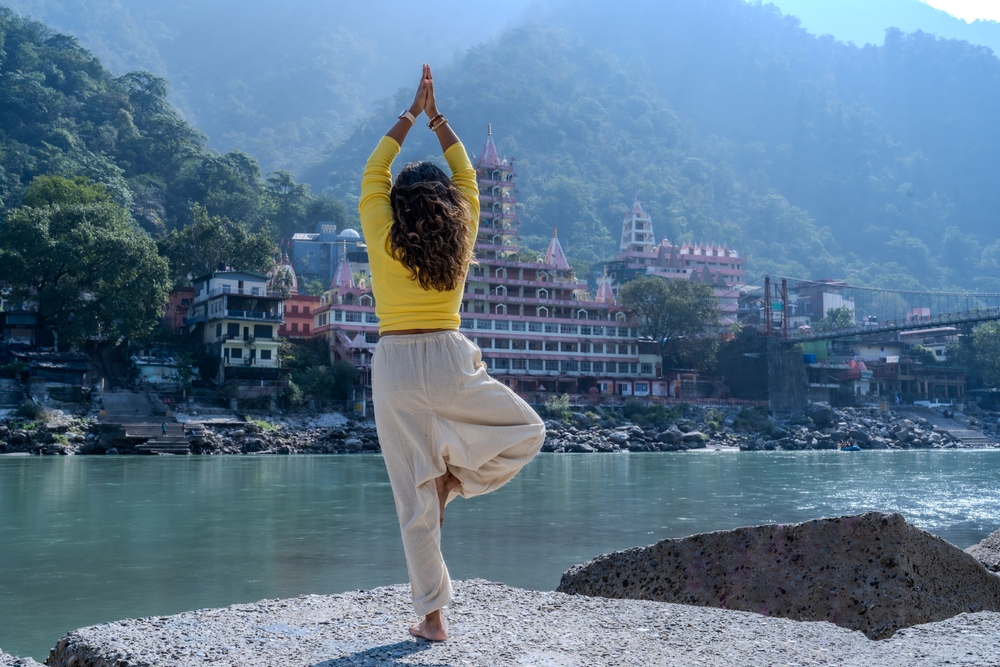
Also Read: Ready to Get Strong? Start here with these 11 yoga poses for strength.
When we talk about yoga philosophy, we come across Rishikesh, the acknowledged yoga capital of the world, and you cannot help but feel a sense of oneness with it. Located in the foothills of the Himalayas, it is a place of great importance and has been a home to seekers, yogis, and sages for thousands of years.
The traditional yoga way of life in Rishikesh is so great because it continuously focuses on the wholeness of yoga, its path of spirituality, rather than taking it as a quick physical workout. In the traditional ashramas and schools of this holy town, students are taught that taking to the practice of yoga demands years of disciplined effort (Sadhana), service to others, and great patience.
This ancient Rishikesh spirit can be brought to your mat even miles away from the banks of the Ganges. You slow down your breath, honor its millennia-old history, and let go of your impatience, and you are in the company of the same wisdom that has been passed down through generations of yogis.
After all, the mat is a mirror for life.
The essence of the concept of being patient in learning yoga is not just in doing a perfect posture. Mat is a mirror. As we are in balance in a pose, so are we in balance in life.
If we have patience with our feet on the mat, we will be kinder, more compassionate, and more resilient off the mat. We don’t rush through life’s moments, and we begin to savor the journey.
The next time you’re on your mat, relax, let go of your expectations, and smile. Your yoga path is your own, and you don’t have to go any faster than you’re able; no one is going to beat you, and you don’t need to be anywhere else. Show patience, trust your body, and just love the process.