Morning vs. Evening Yoga Practice: What Suits You Best?
Namaste and a very hearty welcome back to this sacred place of sharing. It is probable that you have somehow discovered your way to this blog because yoga has somehow entered your life in some manner, or maybe you have just stepped out the door and are about to make that first step towards the mat.
Being practitioners and teachers who have years of practice and teaching experience in and around the spiritual vibrations of Rishikesh, the yoga capital of the world, we have observed thousands of practitioners struggling with the question: when do I do my yoga? Shall I get up with the sun and walk through a rushing stream, or shall I wait till the world is calm at nightfall to stretch out the tension of the day? The argument of morning vs. evening yoga practice is more than old; it is even older than the Himalayas themselves.
In this discussion session we shall investigate the physiological, psychological, and spiritual advantages of the two timings. You will not only understand at the conclusion of this guide which of the two is better (especially to the average person); you will learn which of the two is better for you.
The Sacred Morning: Finding the Energy of Dawn.
Also Read: Mudras: The Forgotten Yogic Language of Energy
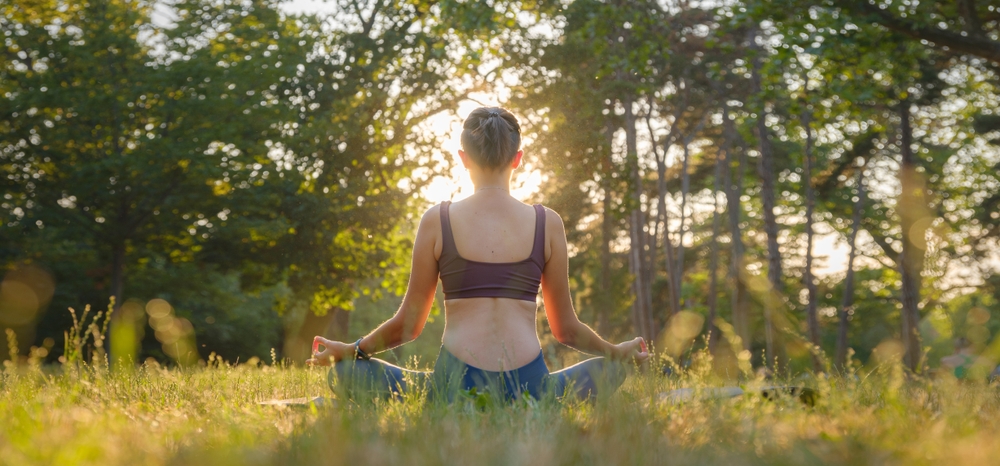
It starts in the center of Rishikesh way before the first tourist steps on the Laxman Jhula. It is a calm morning, at 4:30 AM or at 5:00 AM. This is what yogis refer to as Brahmamuhurta, or the Hours of God. Conventionally, the belief is that the mind is the least active during this period, and the barrier between the material and the spiritual worlds is thinnest.
1. Harnessing Vitality and Intellectual Sharpness.
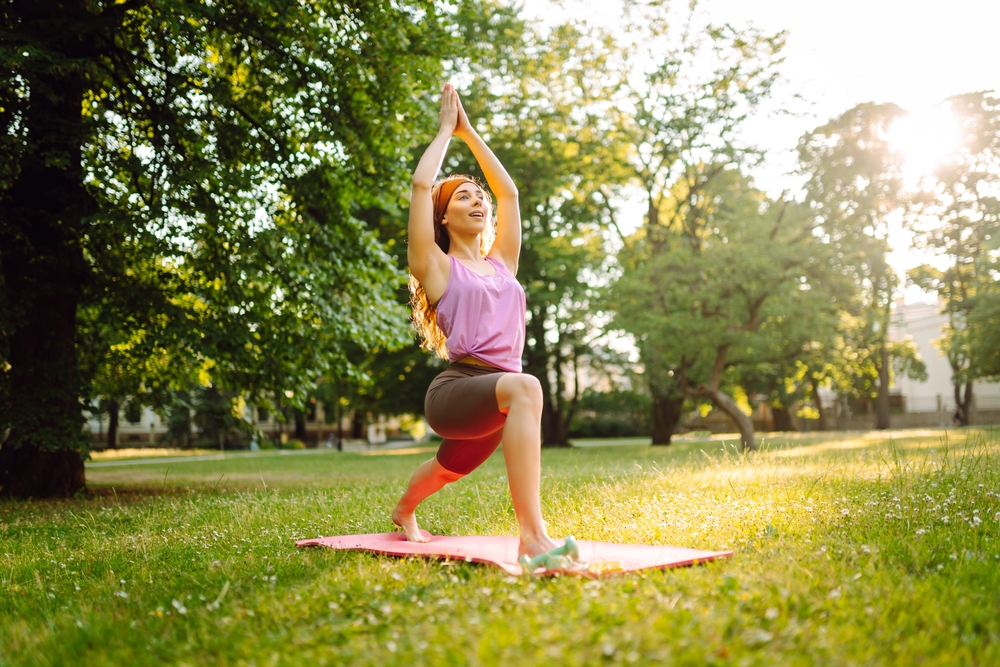
By performing yoga in the mornings, you are really setting the thermostat of your whole day. Physically you are physically just out of a resting condition. When you run through Surya Namaskar (Sun Salutes), you are letting your nervous system know that it is time to be awake.
This exercise in the morning causes endorphins and dopamine to be released. Rather than caffeination to clear the “brain fog,” a morning flow lasts 20 minutes to provide a natural, sustainable energy boost. You will discover that when you get to work or are doing your chores, you are much clearer in mind since you have cleared the cluttered mind you had while you were doing the laundry.
2. Increasing Metabolism and Digestion.
In Ayurvedic tradition, it is most recommended that yoga should be practiced in the morning on an empty stomach. Twisting is a pose that resembles Ardha Matsyendrasana (Half Lord of the Fishes Pose) that serves as a massage to the internal organs. This gets the digestive system going, assists with detoxification, and gets your metabolism going on and on in the morning. The morning is certainly the best time to control weight or enhance gut health.
3. The Psychological Win: Putting Yourself First.
Frankly speaking, life is not predictable. When 5:00 PM comes around, you may be experiencing a surprise deadline, a flat tire, or a friend who requires an ear. When you decide to take the morning yoga practice, you are sure that your self-care is done even before the world can ask anything of you. It creates discipline and respect for self that would permeate into all other decisions you make on the same day.
The Evening Shelter: Unwinding and Relinquishing.
Also Read: The Sound of Stillness: The use of silence in yoga.
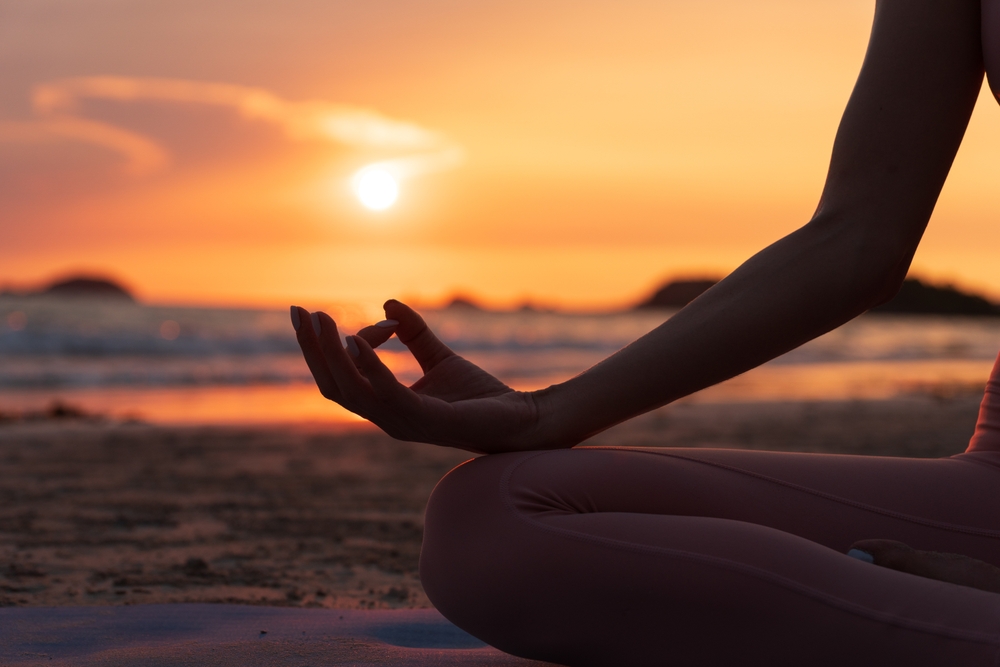
Morning yoga is a blazing fire; evening yoga is an ember of soft, warm glow. The concept of waking up early in the morning seems to most people like an obligation, which contradicts the spirit of yoga (joy and not punishment). In the case that you are a night owl, the night may be your most holy window.
1. Flexibility and physical peak performance.
Do you ever think about how you can hardly bring your toes in the mornings, but you can almost sit in a full split in the afternoons? This is due to the fact that the body temperature increases in the course of the day. Your muscles are more relaxed, and your joints are more oiled with your day-to-day movements.
Since the evenings are the time when you are more naturally flexible, it is best to practice the poses that are called peak poses or deep flexibility. Since you have a certain aim to achieve in your training, such as a more advanced backbend or a more stable headstand, evening is the best time to challenge your physical capabilities with a significantly lower risk of injury in comparison with the stiff morning hours.
2. Stress Dissolution and Mental Hygiene.
Every day, we are bearing the day. The stress can be expressed in tight shoulders, a clenched jaw, or tight hips. Yoga in the evening is a kind of reset button. You do not bring your frustrations with your boss or your traffic stress into the bed, but rather onto the mat.
It is possible to activate the parasympathetic nervous system, also known as the rest and digest mode, by practicing yin yoga or restorative yoga during the evening. It gets your heart rate down and decreases the level of cortisol, which gets your brain ready to sleep deeply and restoratively.
3. A Ritual for Better Sleep
When you are having trouble getting to sleep or if you are experiencing restless legs, a series of grounded poses (such as Viparita Karani or Legs-Up-The-Wall) can be more effective than any sleep aid. Slow, rhythmic evening breathing exhausts you by telling your pineal gland to begin making melatonin. You will have discovered that you not only sleep longer, but you sleep better.
Living to Your Surroundings.
Study and life in a yoga school in Rishikesh make you understand that yoga is not a one-size-fits-all practice. The setting has a massive contribution.
- Practice in the Summer: Morning is nearly a necessity. By noon the heat on the Indian plains may be exhausting. Working in the morning enables you to have the fresh Himalayan weather.
- In the Winter: The mornings in the foothills may be as biting cold. In this instance it is far better to wait until the sun has warmed the ground (about 10:00 AM or even late afternoon) and do things that are much kinder to your joints.
We have a common saying to our students: practice the best, but at the time you will do it. When you are coerced to practice in the morning, but you are yawning through all of your asanas, you do not really mind.
Deep Dive: Dress Like the Time of the Day.
Also Read: Mantras and Chanting in Yoga: A Deep Dive
To make it really effective, you are to correspond the style of yoga to the time of the day.
Morning Recommendations:
Vinyasa Flow: Quick moving and breath-paced to generate heat.
- Ashtanga: This is a disciplined and structured approach that develops unbelievable power and endurance.
- Power Yoga: To make the heart rate increase and the sweat evaporate.
- Pranayama (Kapalbhati): The breath of fire to clean the lungs and to stimulate the brain.
Evening Recommendations:
- Hatha Yoga: Slower: The one that lets you experience the stretch and breathe to the tension.
- Yin Yoga: Long passive holds of the deep connective tissues and fascia.
- Yoga Nidra: This is an in-depth psychic sleep that is achieved through a guided meditation that is also referred to as Yogic Sleep.
- Pranayama (Nadi Shodhana): Breathing from one side to the other to harmonize the right and left hemispheres of the brain and relax the nerves.
Discovering Your Unique Pacing.
So, morning vs. evening yoga practice, which one is best for you?
The solution is found in an experiment. I would suggest to you a week of mornings and a week of evenings. Notice the following:
- What is my immediate response to the practice?
- Three hours later, what is my level of energy?
- Did I sleep well that night?
A “hybrid practice” is the final secret of some people. You might do 10 minutes of sun salutations every morning to get up and 15 minutes of deep stretching every night to get down.
Why Consistency Is Better than Timing.
Consistency is the keyword in your yoga practice, whether you are taking it in the dawn or the dusk. Being on Google or being the best yogi is not the point; the point is a healthier and more balanced you.
The Rishikesh people say that the mat is a mirror. What you will find there at 6:00 AM may not be what you will find there at 6:00 PM, but you have two versions of you, and you need to take care of them both. This is something we are gently reminded of through the journeys of students who practice with us at Maa Shakti Yog.
Are you ready to go to the source of your practice?
A blog post can only tell so much. The real nature of yoga is experienced in the air, the chant, and the community. Maybe you have been feeling the urge to learn more about this ancient science, but have you thought of a 200-hour yoga teacher training in Rishikesh?
Just consider waking to the sound of the Ganga, exercising in the morning sun, and spending your evenings under the stars meditating. It is a life-transforming experience, which is not limited to working out.
We’d love to hear from you! On a sunrise flow in the morning, are you a lark? Or at night, are you a night owl?