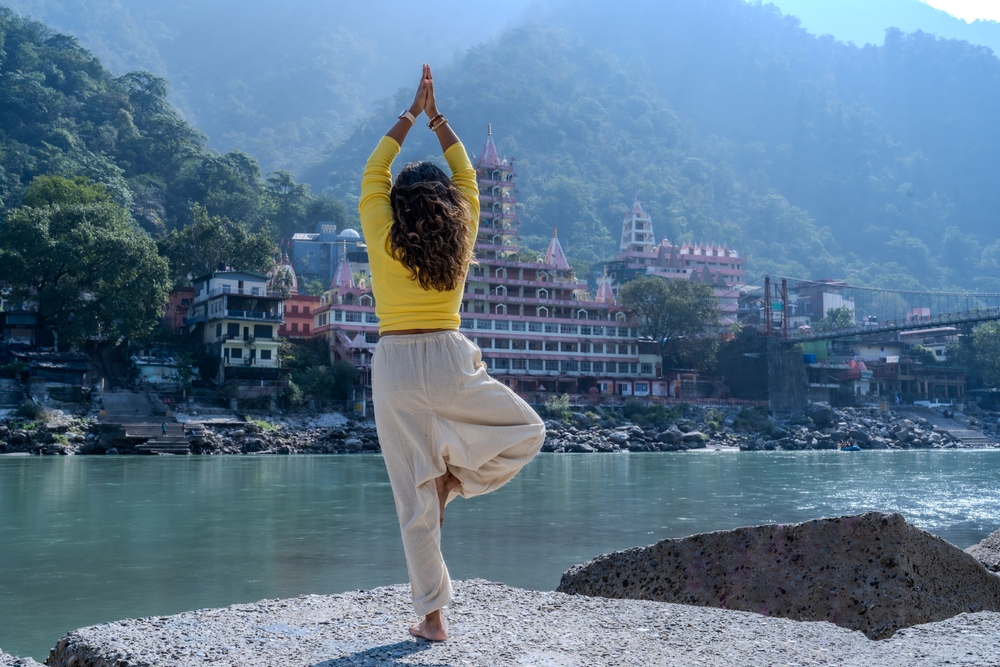
The Big Leap: Preparing to take a course of teaching yoga.
Namaste, fellow seekers.
Having read this, you have probably experienced that very strong attraction, that one that reveals to you that it is high time to leave behind being a student on the mat and become a guide to others. The choice to attend a Yoga Teacher Training Course (YTTC) is a huge undertaking. It is not only a career change; it is a soul search, a physical ordeal, and a spiritual realization in a pack.
Being students and instructors who have practiced and taught over the years in the center of the so-called Yoga Capital of the World, we have witnessed hundreds of students showing up at our yoga teacher training in Rishikesh. Some come prepared to fly, whereas others may be overwhelmed by the intensity. The difference? Preparation.
To have the ability to reach your toes is not all that it takes to prepare for a 200-hour school of yoga teacher training. It is about adjusting to a life-changing experience mentally, physically, and spiritually. Many students arrive in Rishikesh thinking preparation means physical flexibility alone. However, through years of teaching and learning in this environment, it becomes clear that true readiness is internal. At Maa Shakti Yog, we have seen that students who come with patience, self-awareness, and respect for the process experience the deepest transformation not just as practitioners, but as individuals. Sit down, have a cup of herbal tea, and discuss with you how you can get ready for this awesome adventure.
1. Cultivate a “Beginner’s Mind”
Also Read: Yoga for Back Pain Relief: Gentle Approaches That Work
A yoga teacher training course will do you a favor even when you have been practicing. Deconstructing will make you think you have mastered and know why every movement is the way it is.
Your best friend as far as this is concerned is the Zen notion of Shoshin, or beginner mind. Be open in your training. Do not fall into the trap of I know all about it. By coming to Rishikesh, you are not only learning how to teach, but you are also learning how to view yoga with a new, clear, transparent set of glasses. This state of mind enables you to internalize the ancient wisdom of Hatha and Ashtanga yoga on a deeper level.
2. Consistency Over Intensity
One of the most prevalent errors is to cram physical practice that students make. They believe that they have to learn how to do a handstand or a deep backbend before they appear. Please, don’t do this! You do not want to go to your yoga certification program with a burnout or an injury.
Rather than attempting to perform the most challenging poses, emphasize consistency.
- Practice 4–5 times a week.
- Pay attention to your position and respiration.
- Begin to do a sun salutation routine (Surya Namaskar) every day.
What you want to do is to develop the stamina needed in a 200-hour or 300-hour yoga teacher training where you are potentially doing several hours of practice per day.
3. Plunge into Yoga Philosophy Early.
Also Read: Mudras: The Forgotten Yogic Language of Energy
Yoga is far beyond asanas (poses). The physical practice is actually not the only one among the eight limbs of yoga. The majority of good yoga teacher training courses in India shall immerse themselves in the Bhagavad Gita and Yoga Sutras of Patanjali.
These names are not familiar to you; that is all! You do not have to be a scholar, yet having read a few introductory books will give you an enormous start. We recommend:
- Yoga Sutras of Patanjali (with commentary).
- Light on Yoga by B.K.S. Iyengar
- T.K.V. Desikachar, Heart of Yoga.
Getting acquainted with such concepts as Dharma, Karma, and the Yamas and Niyamas will ensure that the afternoon philosophy classes in Rishikesh will feel like a natural part of the home instead of a foreign one.
Comparison: Why Rishikesh Is the Best Place to Do Your YTTC.
| Feature | Yoga in the West | Yoga in Rishikesh |
| Atmosphere | Studio-based, often commercial | Spiritual, ashram-style, authentic |
| Environment | City noise, busy schedules | Holy Ganges River, Himalayan foothills |
| Teaching | Often focused on fitness | Focused on holistic lifestyle & tradition |
| Diet | General | Sattvic (yogic) vegetarian meals |
4. Get a Head Start on Anatomy
You do not have to be a doctor; the knowledge of the basics of the human body will come in handy during the yoga anatomy modules. When your teacher explains about the poses or scapular stabilization, you are going to want to know what this alludes to.
Being aware of the motion of the joints (flexion, extension, and rotation) will not only make you a better teacher but will preserve you and your future students as well. The great YouTube channels and the simple anatomy books that are specifically for yoga practitioners are numerous.
5. Get Your Body Ready to Live a Sattvic Lifestyle.
You will be changing your ways of life in case you are attending a yoga retreat in Rishikesh or residential training. The majority of the orthodox schools adhere to a Sattvic diet that is, vegetarian, fresh, and simple and to soothe the mind.
During the weeks before your course, you can attempt to:
- Limit the consumption of caffeine and processed sugar.
- Increase the use of plant-based meals.
Adjust your sleep schedule. The day starts at 5:00 AM or 6:00 AM at most ashrams. In case you are a night owl, you must begin to wake up 15 minutes earlier every day up to the time you get accustomed to the early lights.
6. Rishikesh Checklist: Logistics and Packing.

Also Read: Morning vs. Evening Yoga Practice: What Suits You Best?
It is a dream to come to the Rishikesh Domain to do your training, but there must be certain practical planning. Rishikesh is a religious city, and the power here is luminous and sacred.
What to Pack:
- Modest Yoga Wear: Although leggings are appropriate in the yoga hall, it is also polite to put on loose and modest garments (including shoulders and knees) when walking around Rishikesh.
- A Good Yoga Mat: Although most schools offer them, it is also true that a mat that fits you well and you can practice on all day long may be a blessing.
- Journal and Pens: You are going to get a lot of Aha! moments. You’ll want to write them down.
- Reusable Water Bottle: To be hydrated and environmentally friendly.
- Personal First Aid: Basic medication, electrolytes, and maybe some probiotics to make your stomach accustomed to the tasty Indian spices.
Travel Documents:
Your passport must be at least six months old, and you must have taken out an appropriate visa (most students take either an e-Tourist or e-Conference visa, although the current Indian government regulations vary).
7. Hold a Decisive Purpose (Sankalpa)
When you are about to board the plane or get to the shala, question yourself: Why am I doing this?
- Is it to start a new career?
- Is it to recover some past experience?
- Is it to enrich your own practice?
No correct answer, but it is good to have a clear Sankalpa (intention) to have as your anchor when the training becomes arduous. And it will get tough! You will have days when you will feel sore in your muscles or your mind will be full, and remembering your why will make you have the strength to continue.
8. Monetary and Professional Planning.
An investment in a yoga teacher course is an investment. Included in the course fee are your flights, weekend trips to the Beatles Ashram or the Kunjapuri Temple, and some extra cash to buy those tempting silk scarves and crystals in the local shops.
In case you are going to teach right away, you should start thinking about your brand or the way you want to share your knowledge. However, do not lose track of the learning process because of this; be present.
Yoga does not merely alter the perception of things; it alters the one who sees. — B.K.S. Iyengar
Last Reflection: Accept the Process.
The greatest preparation technique to teach yoga is to go with an open heart. Rishikesh has a tendency to peel off the layers of what you think you are to expose who you really are. It is a magical place, and you can be reminded of the fact that you are involved in something bigger by the sound of the bells of the Ganga and the evening Aarti bells.
There is no need to fear the idea of being perfect. And your future students will not require some ideal teacher but an authentic one. Having gotten ready physically, mentally, and logistically is clearing the road so that the actual work can start.
We are not looking forward to seeing you on the mat in the foothills of the Himalayas. The path of a thousand miles commences with one “Om.”