Yoga for Back Pain Relief: Gentle Approaches That Work
Namaste, dear friends.
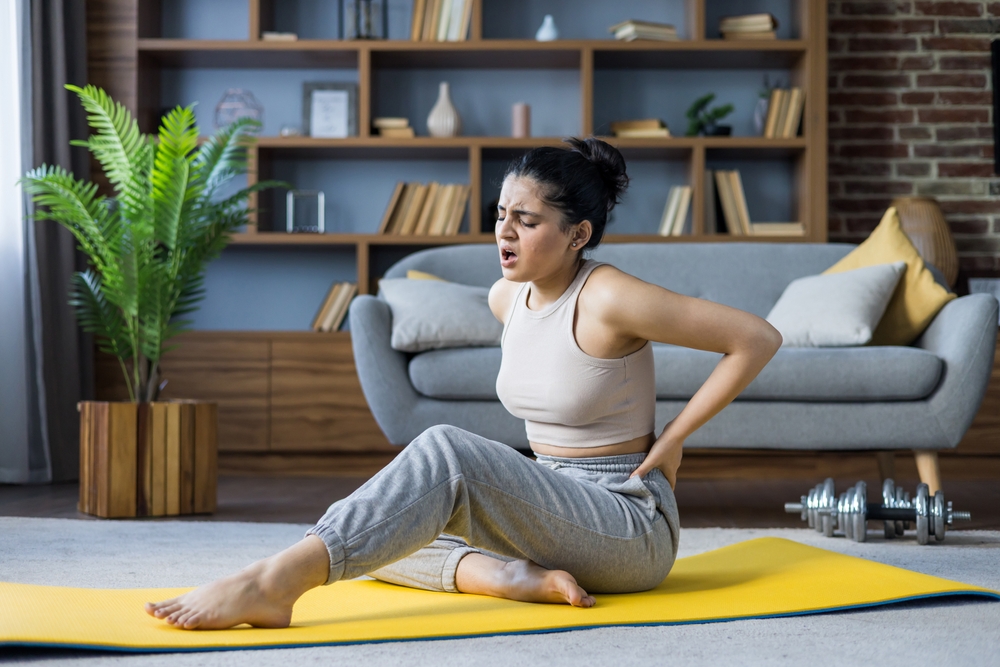
It is time to have a candid conversation on something many of us unfortunately relate to: back pain.
You, probably, know what we are talking about, probably because you are reading this. Or perhaps it is the fact that you have sore pain in your lower back when you have a longer day at work sitting at a desk. Maybe it is some stabbing pain when you go to knot your shoelaces, or it is the general ache that meets you in the morning when you get out of bed.
Believe us, we hear you. During my teaching experience in Rishikesh, the gorgeous and colorful Yoga Capital of the World, we have come across a myriad of students who come to the mats in an attempt to find relief from their back pain, including many who walk this path with us at Maa Shakti Yog. They are not seeking to do the high-ranking acrobatic stunts; they simply want to be capable of getting around in their everyday lives without shunning.
The good news? You are where you belong, and there is so much hope.
Yoga has been misunderstood to be the reserve of the flexible. But what yoga is all about, particularly the traditional traditions that we hold dear to us here in Rishikesh, is about healing, mindfulness, and doing good to your body. In the case of yoga that is used to treat back pain, it should not be no pain, no gain. It ought to be no pain, more gain.
Today, we would like to tell you about some tender methods that really do work. Imagine this post to be a cup of tea and a hand on your shoulder helping you to have a happier spine.
The story behind the Ouch: Why Our Backs Ache.
It is worth understanding the source of the problem before delving into the poses. Our way of life in the present age is seldom spine-friendly. We waste hours with phones in our laps, in traffic jams, or in chairs that do not support our backs at all. It leads to chronic tightening of some muscles (hip flexors and chest) and the weakening and sleepiness of other ones (deep core and glutes).
The result? The poor back, particularly the lower back (lumbar spine) is the one that bears all the weight. It is squeezed and cranky, and at some point it screams.
Get in soft yoga back pain.
Yoga does not simply stretch our stiff muscles; it reteaches them. It helps us learn to put space between our vertebrae, how to use supporting muscles of our core without straining, and possibly most of all how to relax the nervous system so that the body can quit on the defensive with pain signals.
The Golden Rule: Ahimsa (Non-Harming).
We should have a rule of yoga, before you roll out your mat, a rule that is deeply embedded in the yoga in Rishikesh ethos, which is Ahimsa, or non-harming.
In case these poses become troublesome to practice, when you experience sharp, shooting, or electrical pain, cease. That is your body’s red light. Back off. Any kind of stretching or warming is good; any kind of sharp pain is never good. See how wiser than anything is thy own body.
5 Poses of Yoga to Calm Back Pain.
Also Read: Morning vs. Evening Yoga Practice: What Suits You Best?
These are poses that practically anyone can do. It does not require expensive gear; a mat or a comfortable rug and a folded blanket to cushion will do. We are talking here of lower back pain yoga, which is the most frequent complaint, though these will improve the whole spine.
1. Cat-Cow Flow (Marjaryasana Bitilasana)
This is my ultimate favorite way of commencing. It’s like oiling a rusty hinge. It is a mild stimulation of the whole spine, which moisturizes the discs, promoting mobility.
How to do it:
Begin on all fours (tabletop position) with wrists below shoulders and knees below hips. Use a blanket beneath the knees in case they are sensitive.
- Inhale (Cow Pose): Gently roll the belly away on the floor, raise the chest forward and upwards, and gaze semi-softly upwards. Let your tailbone tilt up. Make sure that you keep your belly involved so as to cushion the low back—and do not just fall.
- Breathe out (Cat Pose): Press on your hands, and bend your spine to the ceiling as a furious Halloween cat. Tuck your chin in and tuck your tailbone in. Feel the aperture between your shoulder blades.
- Flow: To and fro with slow breaths for 10 rounds.
2. Wide Knee Child Pose (Balasana).
It is a pose of submission and ultimate relaxation. It is remarkably useful in the process of relieving minor back pressure and loosening the hips.
How to do it:
- Bring your big toes to come in contact with each other and put your knees out wide at the sides of your mat.
- Gradually bring back your hips towards your heels.
- Bring your hands forward, and bring your forehead down to the mat (or a stacked fist, or a block, in case of an excessively distant floor).
- Take a deep breath into your back ribs. Think of your breath swelling up a balloon in your lower back, stretching that tight space. Stay here for 1–2 minutes.
3. Sphinx Pose (Salamba Bhujangasana).
The backbends scare many individuals who have back pain. However, the Sphinx is a very nice supportive backbend that is a good counter to the forward bend of sitting at a desk. It makes the muscles that run along the spine strong.
How to do it:
- Lie on your belly, legs stretched back, hips a hip-width apart.
- Rest your forearms on your shoulders, your elbows at right angles. Dorsal sides of forearms must be the same as tracks.
- Slide your pubic bone into the mat.
- Thought of holding the mat by the elbows and dragging your chest closer to your upper arms. Don’t be crunching your head back; keep your neck long.
- In case there is a pinch in the lower back, straighten the backbend by ensuring that your elbows walk forward more. Hold for 5–8 deep breaths.
4. Knee-to-Chest (Apanasana) One Leg at a Time.
It is a marvellously safe method of spinal stretching of the lower back and of the glutes, with the spine held in full support by the floor.
How to do it:
- The knees are bent, and the feet are on the floor.
- Pull your right knee toward your chest, grabbing your hands behind your shin or the back part of your thigh.
- The left foot remains on the ground, or in a more advanced pose, the left leg is stretched out gradually along the mat.
- Have your shoulders and head loose on the floor. Apply a gentle rocking motion to the right knee, side-to-side, in order to massage the hip socket.
- Wait 30 seconds, then change sides.
5. Gentle Supine Twist (Supta Matsyendrasana).
Twists are great in relaxing the entire backbone and may prove to be very effective in the yoga of sciatica alleviation. The key here is “gentle.”
How to do it:
- Lie back on your back and bring both knees towards the chest.
- Make your arms out to a T, palm upwards.
- Bend both knees slowly to the right-hand side. It is possible to place a pillow or blanket under the knees in case they are not reaching the floor easily.
- Attempt to have your left shoulder fixed on the mat. You need not look over your right shoulder. Are you comfortable with it?
- Breathe in the left of the ribcage and waist. Wait 1 minute, then use your core to take the knees back to a central position, and go to the left side.
Yoga Out Of Mat: Rishikesh Mood.
Also Read: The 8 Limbs of Yoga: A Holistic Path to Inner Peace, Clarity, and Spiritual Growth
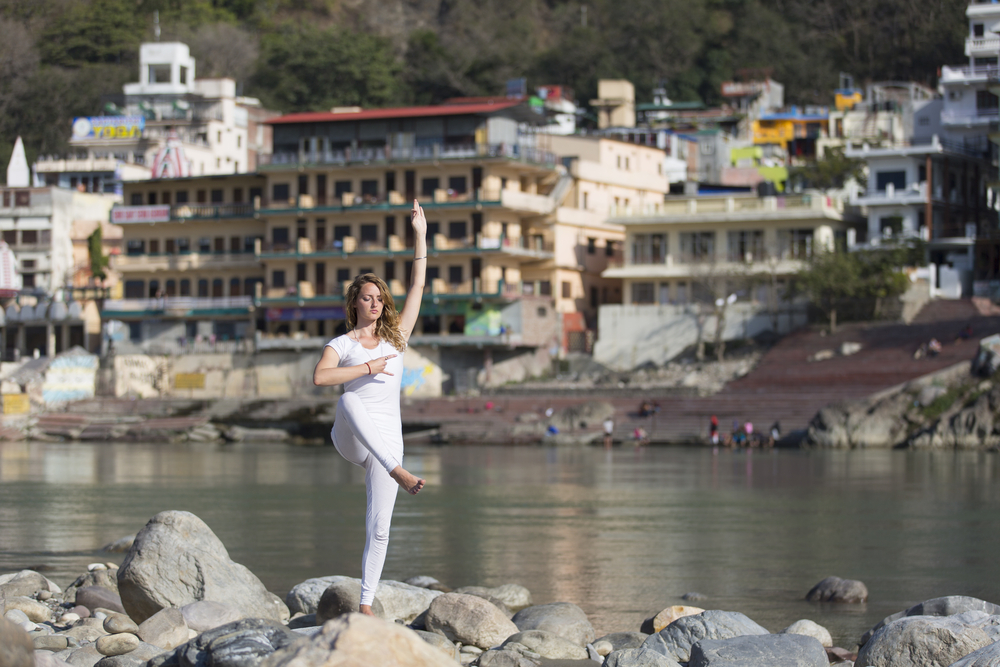
In Rishikesh, on the sacred banks of the Ganga, yoga is neither what you do during an hour on a piece of rubber. It’s a way of living.
It is also mindfulness off the mat for healing back pain. Take note of the way you are sitting just now as you read. Up by your ears, have you your shoulders? Is your spine rounded? Breathe deeply, relax your shoulders, and sit up a little.
Unity is much more significant than intensity. Doing twelve easy yoga poses every day and spending fifteen minutes doing it is incomparable to doing a strenuous, sweaty, ninety-minute session five times a week.
Be good to your body just as you would provide solace to a good friend in pain. Be patient. Healing is not a one-way process, but through soft and regular practice, you will experience a greater amount of space and comfort in your body.
In case you are ever tempted to go further into the healing, be assured that the gates of Maa Shakti Yog Rishikesh are always open to you. Until that time continue breathing, continue moving softly, and be very careful of your spine.
Om Shanti (Peace).