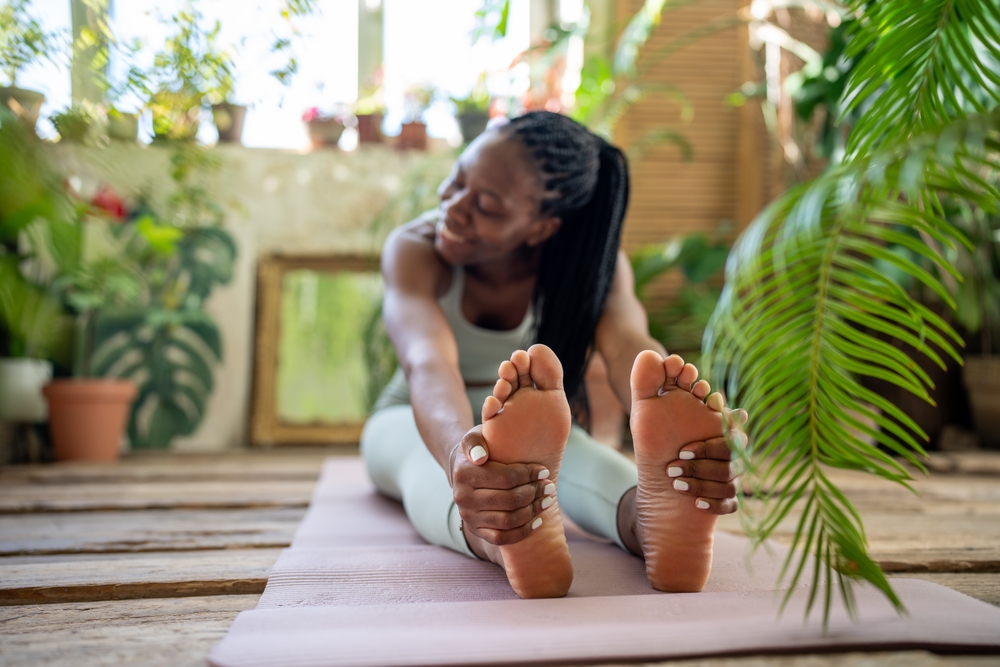
The Role of Environment in Yoga Practice: How Your Surroundings Shape Your Mind and Body
Has it ever happened to you that you have arrived at the class with a messy room and a lot of noise and had to shuffle through all your poses? Or maybe you’ve experienced a yoga class outdoors, and you noticed the gentle breeze against your skin and felt a sense of peace right away without even taking a deep breath.
Yoga is usually considered an internal journey, one that includes breath, mind, and movement. We’ve learned in our years of experience and teaching, however, that our outer world and our surroundings have a huge impact on our inner world. At Maa Shakti Yog, we’ve seen this firsthand. Whether students join us for daily classes, immersive retreats, or yoga teacher training programs, the environment often becomes as transformative as the practice itself. A peaceful setting naturally encourages deeper awareness, steadier breath, and a more mindful connection with the body.
Yoga practice takes place in a very quiet and calm space, whether it’s the quiet corner of our home or a dedicated yoga studio; the space we surround ourselves with directly affects our nervous system, focus, and energy flow. Let’s discuss today how the environment around us influences our yoga practice and how we can create an intentional space that enriches us in and out of our yoga practice.
Your environment is your yoga!
Yoga is the merging of mind, body, and breath. Traditional Hatha and Vinyasa yoga teach us that the senses are portals to the mind. In an environment where our world is loud, hectic, and visually stimulating, our nervous system remains operating at an elevated state of alertness. This makes it hard to focus the mind inwards.
On the other hand, a harmonious and calm environment helps practice one of the eight limbs of yoga, called Pratyahara, which translates to ‘withdrawal of the senses. ‘As we minimize sensory distractions, our internal mind relaxes, giving us the opportunity to go deeper into yoga asanas (postures), pranayama (breathing exercises), and meditation.
Let’s look at some of the elements of the environment that actively influence our experience:
1. What is sacred geometry, and how does it relate to sound, sight, and cleanliness?
This is the Power of Visual Calm:
The brain is continually getting information through our eyes. Uncleanliness in the home, whether your laundry is dirty, papers are strewn about, or your room is somewhat chaotic, is a subconscious reminder that you have unfinished business.
Creating a designated and clean yoga space is a great way to tell your mind it’s time to take it easy. Your workspace is a bright place to practice if it’s free of clutter.
Even acoustics and quiet.
One of the strongest stimulants to the nervous system is sound. If we are in a stressful situation, whether that is a lot of noise or something abrupt that has happened, our “fight or flight” mechanism is engaged, and restorative yoga or yoga nidra is nearly impossible.
The quiet surroundings must not be complete in today’s world, but the soothing sounds of nature (water, birds, etc.) or soft singing bowls or gentle Indian classical instruments help to ‘ground’ our attention in the environment.
Pure Air and Breathwork (Pranayama)
In all yoga flows, breathing is the core element. It helps a great deal to practice in an area where fresh air circulates. Good ventilation helps our bodies rise to the occasion, feeds our cells when dynamic with morning yoga, and avoids sluggishness.
There are some other tips to try: Include natural materials like indoor plants (e.g., snake plants or peace lilies) and natural incenses (e.g., sandalwood or frankincense) to overall improve the air quality and establish a grounded and sacred ambiance.
2. Natural elements and urban spaces.

Also Read: How Long Should a Yoga Session Be? The Honest Truth
The type of energy we produce depends on our surroundings for living.
| The Yoga Environment | |
| Natural Spaces | Urban Spaces |
| Grounding Energy | Structured routine |
| Fresh Air and sunlight | Controlled temperature/ Light |
| Natural Soundscapes | Community connection |
Taking a break to practice in nature (the ultimate grounding)
Why are people on a quest for meaning congregating around awesome mountains and holy rivers for thousands of years? Natural environments provide a natural beat that can’t be matched in a city.
Being near nature, which includes the flowing water of the Ganges River, under canopy trees, or looking out at the Himalayan foothills, can help synchronize our internal clocks with the earth’s. Nature provides:
- Pranic Energy: Abundant oxygen and natural sunlight increase our vital force (prana).
- Grounding (Earthing): Release excess nervous energy and lower stress hormones by being connected to the natural ground.
- Alignment with the sensations we have: When we hear the tapping sounds of the “waterfall” and “leaves” buttons, it will always bring our heart rate down.
Creating Sanctuary in Urban Homes
We might not be able to have a mountain view outside our window if we live in a busy city, but that’s okay! A sacred “micro-environment” can be created in our own homes.
We condition our minds by setting aside a specific corner for yoga, where one will find a quality yoga mat, a soft light, and little furniture. Just putting on that mat evokes a sense of peace immediately over time.
3: Energy of Shared Spaces (Sangha)
Actually, the world is not only made up of material things; it also consists of shared energy.
At home, we learn discipline! However, in group settings like a yoga retreat or a traditional ashram, the energy of the group raises our practice.
In yoga, this is a spiritual community that provides support, called Sangha. When working with other people with similar intentions, it creates a strong resonance. It can assist to break through resistance when that’s needed during difficult Ashtanga yoga poses or extend the length of time spent in silence for yin yoga.
This is why retreats in spiritual hotspots such as the peaceful ashram town of Rishikesh can be so enchanting. We are inspired by the continuous practice, as lived through those spaces, to go deeper than we would on our own.
10 Easy Tips to Improve Your Practice Space Now!
It doesn’t take a large home studio to enjoy the benefits of a well-curated space. There are some things that we can do now:
- Choose a Fixed Spot: A clean corner of your house that will have your practice only!
- Reduce the light: Avoid the use of bright overhead fluorescent lights. Opt for warm lamps, beeswax candles, or soft natural sunlight.
- Bring Essential Props: A firm bolster, comfortable yoga blocks, and a clean cotton mat will be nearby for complete support of your body.
- Create a space that you set an intention in before stepping into it: It doesn’t have to be a large rug between your bed and your desk; it can be as small as you like, but it’s a space that you set an intention in before you go into it and treat as sacred. Keep your phone and concerns outside of your mat.
Final Thoughts: Bringing the Environment Within.
Finally, our physical surroundings will reflect and stimulate us. A quiet and intentional space that is clean encourages a clear, calm, and present mind.
We should try to seek inner peace and find adaptation in any environment, even in the middle of a noisy room, but cultivating our environment is the first step that our mind needs to be nourished with. On the next rollout, notice the environment; make it loving, and let the environment guide you deeper and more peacefully into your practice.
Namaste.