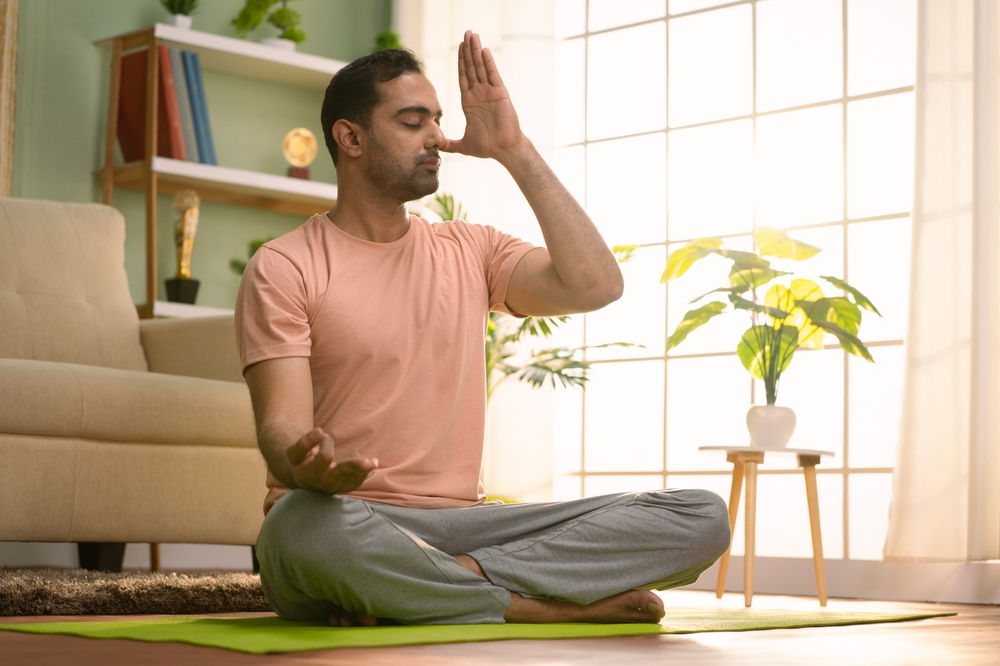
Simple Pranayama Practices for Daily Balance
Namaste, friends! When you have ever stood on a yoga mat in a place so full of spiritual energy as Rishikesh, you are aware that yoga is not just about flexing your hamstrings. We have a thread that can be felt to tie us up with our movement, and that thread is the breath. At Maa Shakti Yog, we believe the real connection begins with the breath. That invisible thread links our body, mind, and energy.
The world of 2026 never appears to get tired of its screens, and so in the busy world, it may appear like Hercules to discover a sense of center. However, what we would like you to know is that the strongest emotional control mechanism and physical well-being generator is already in you.
Now we are plunging into Pranayama. No matter whether you are a local practitioner here in the Yoga Capital of the World or you are a global seeker and want to bring a bit of the Himalayas into your living room, these simple Pranayama practices to maintain balance every day will transform your life.
What is Pranayama? Really?
We shall first clear the air before we explore the techniques. Most of them believe that pranayama only involves breathing exercises. Although that is a good beginning, the word has a lot more to it.
“Prana” in Sanskrit translates to “life force” or “vital energy,” and “ayama” means “to stretch” or “to pull.” Thus, when we are practicing our Pranayama, we are not only huffing and puffing, but we are learning to navigate and develop the energy that sustains us.
Consider your breath your remote control over your nervous system. When you are stressed, your breathing is shallow and rapid. When you are relaxed, it is deep and steady. With the help of the breath, you can literally hack your brain by altering the breath intentionally to alter your state of panic into a state of peace.
Why Do Pranayama Every Day?
You may be questioning yourself, “How come I have been breathing my entire life, and I still have to practice breathing?” It’s a fair question! The fact is that the vast majority of us actually breathe with only a quarter of the lung capacity. Our breathing indicates to the body that it is in a perpetual fight-or-flight mode, which is caused by the chest breathing.
There are a number of science-supported benefits of incorporating pranayama into the morning routine of beginners:
- Relieves Stress and Anxiety: It decreases the level of cortisol nearly immediately.
- Enhances Concentration: You get the fog out of your brain since it oxygenates the brain in the mid-afternoon.
- Stimulates Immune Response: Deep breathing helps the lymphatic system to eliminate toxins.
- Sleep More: There are certain tricks that will enable your body to get deep sleep and rest.
Simple Pranayama Techniques for Beginners.
You need not mind if you are new to this. You do not have to sit in a cave and spend ten years to experience the repercussions. These are three practices that can be practiced anywhere you are, whether in a work chair or on your balcony facing the Ganges.
1. Nadi Shodhana (Alternate Nostril Breathing)
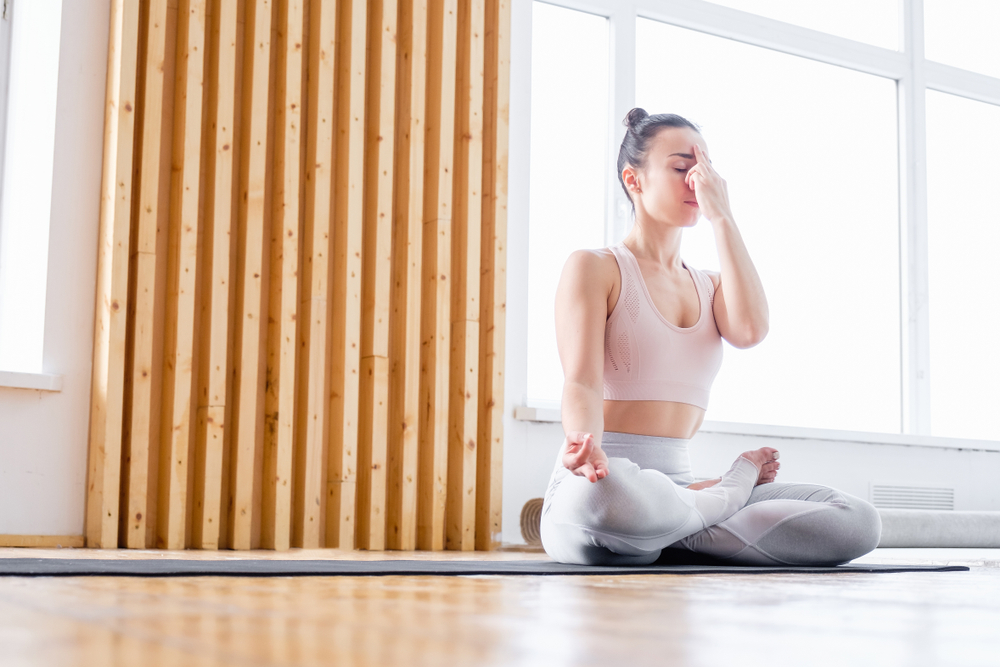
This can be called the Holy Grail of everyday balance. We assume that there are two major energy paths of the body in Hatha yoga: the Ida (cooling, feminine) and the Pingala (heating, masculine). Nadi Shodhana assists in balancing the two extremes.
How to do it:
- Sit erect.
- Keep your left hand on your knee. Close your right nostril with your right thumb.
- Breathe in deeply with the left nostril.
- Using your ring finger, cover the left nostril and uncover the thumb, and exhale out of the right.
- Breathe in using the right side, then close the right side and breathe out using the left side.
- Repeat for 5–10 rounds.
Hint: Do not make any noise with your breath. When we breathe like a steam engine, then we are overdoing it! Keep it soft and fluid.
2. Bhramari (Vibrations of the Humming Bee Breath)
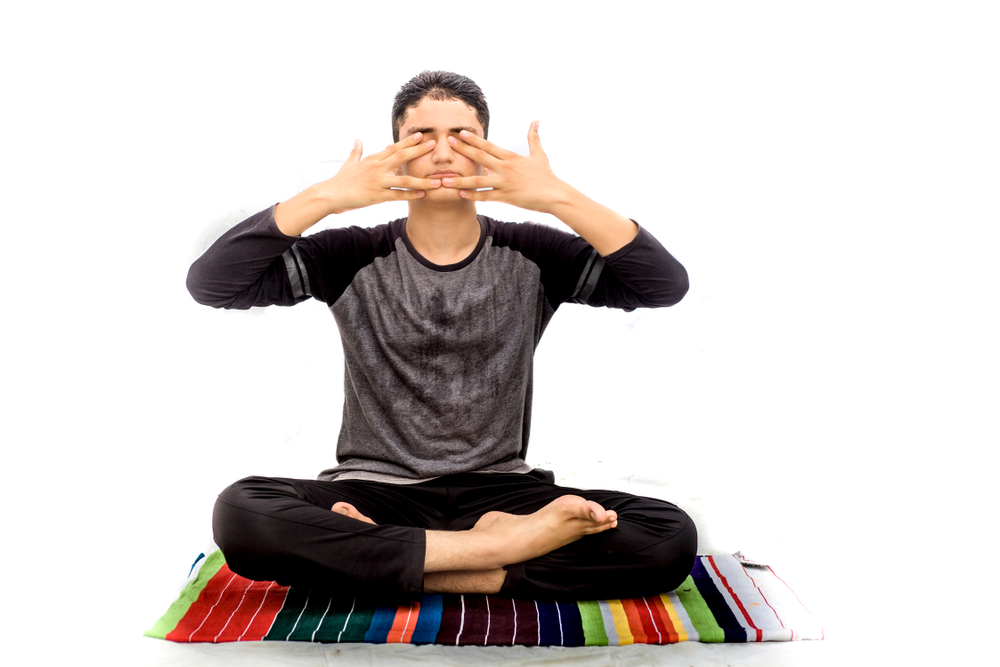
In case your mind is like a crazy beehive, it is your best friend in this practice. It is amazing as a quick stress reliever and can be recommended for use by persons with hypertension problems.
How to do it:
- Now sit still and shut your eyes.
- Put your index fingers over the ear’s cartilage (tragus).
- Breathe deeply in through the nose.
- When you do the breathing out, close your mouth and hum in a steady and low-pitched “Mmmmmm.”
- Touch the throbs in your head and heart.
- Repeat 5 times.
3. Sama Vritti (Equal Breathing)
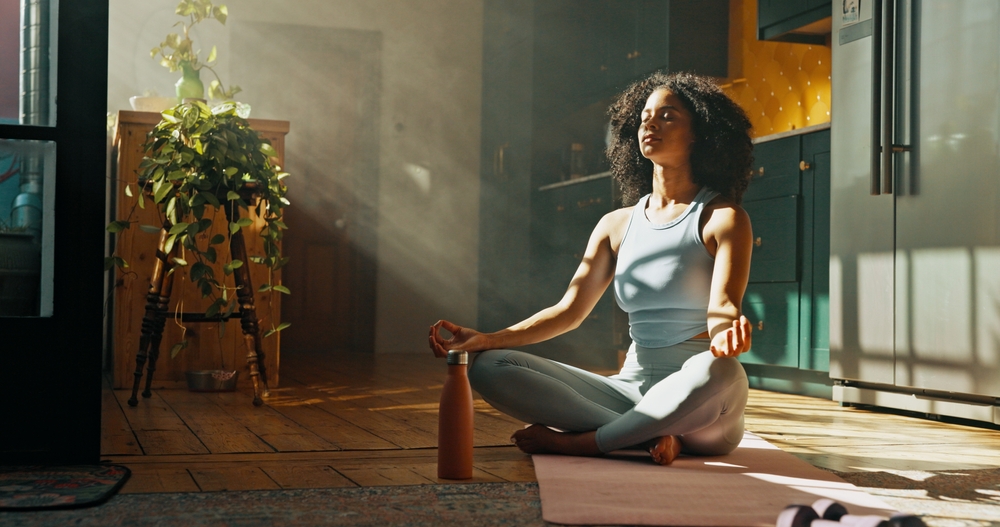
It is the final emergency inhalation when life is too much. It is discreet, easy, and very efficient in stabilizing the heart rate.
How to do it:
- Inhale for a count of 4.
- Exhale for a count of 4.
- When you feel comfortable, you may add some to 6 or 8.
- This is aimed at establishing the same length and texture of the inhale and exhale.
Pranayama: Fitting Pranayama into Your Rishikesh Lifestyle.
Rishikesh provides one of the benefits of living or visiting. Pana is abundant in the atmosphere around the Ganga. Nevertheless, the traffic noise or the need to follow a yoga teacher training course may be a strain even in this holy ground.
We would always recommend our students engage in their pranayama at Brahma Muhurta (the time of Brahman) when it is about 1.5 hours before the sunrise. It is a silent world; its energy is sattvic (pure), and your head is a blank slate.
When you cannot handle mornings, then practice in the evening. It is like a reset button, and you forget the working day, and you pass to a relaxing evening.
Common Mistakes to Avoid
These are the same few hiccups that we experience as instructors when we initiate people into the breathwork program. In order to make the most of your pranayama to help you establish your daily balance, remember:
- Coercing the Breath: Straining never. Stop if you are feeling dizzy or gagging. Your breathing ought to be like a soft wave, not a tug-of-war.
- Bad Posture: When you are stooped, your diaphragm will not be able to move correctly. Sit on a cushion or a block so that you tilt your pelvis forward and extend your spine.
- Practicing on a Full Stomach: One should prefer waiting at least 2-3 hours after a meal. A full belly limits the action of the lungs and even causes nausea.
The Science of the Breath
Although these techniques were discovered by the ancient sages of India by intuition and meditation, they are eventually being discovered by modern science. At a slow breathing rate of about 5 or 6 breaths per minute, we reach a “resonance frequency.”
This condition coordinates the heart rate, blood pressure, and brain waves. It informs our amygdala—the brain segment that deals with fear—that we are not in danger. Pranayama is an extreme form of self-care in a world that keeps informing us that we are not safe (in the news, on social media, at deadlines).
Finding the Right Practice to Use.
Although this table is taken away to make the flow of our conversation more natural, it is essential to bear in mind that each of the practices is used in a different aspect of your day. An example of such is Nadi Shodhana, which you use when you want a general balance and to prepare to meditate. It is the ideal method of waking up before a hectic day or research time.
Conversely, Bhramari can be used when you are in high-intensity stress and you require the physical change instantly. The inner vibration is absolutely stabilizing. Lastly, we have Sama Vritti, which is literally your life lifeboat; you can apply it when you are walking to the market or even sitting in a meeting and allow it to keep your nervous system from spiking.
Final Thoughts: Just Breathe
The beauty of pranayama is that one needs no equipment, no expensive leggings, and no flexible hamstrings. It will just need your presence.
When you are in Rishikesh now, we would suggest that you go down to the banks of the river and do your practice there. Be led by the beat of the running water. In case you are far, you can just close your eyes and start visualizing the mountains. The prana is homogeneous everywhere.
Start small. It is five minutes a day, not an hour a week. Patience is all you need to do with yourself, and you will start to notice your internal world starting to change so that it is not entirely in a state of confusion but rather one of balanced hum.