
The Quiet Revolution: Guided vs. Silent Meditation—Which Path Is Yours?
Namaste, friends.
You may be reading this either on a balcony overlooking the Ganges or at a busy office desk miles away, but get yourself a deep breath. Just one. Feel that? That’s the start of your practice.
Being longtime teachers on the mat, we receive more questions than any other one: How do we actually quiet our mind? Most of the time, the question is then preceded by a discussion: Guided vs. Silent Meditation.
Here in Rishikesh, at Maa Shakti Yog, we find all kinds of seekers wrestling with this question daily. Others like to be comforted by the toned voice of a teacher, and others by the deep-seated “Mauna” (silence) that has been preserved by the Himalayas since time immemorial. But which of them is best?
The fact is, meditation is not a universal garment. It’s a custom-tailored experience. We are going to dive into the details of the guided and silent practice to allow you to discover your rhythm.
What is Guided Meditation?
When you are new to the mindful world, then guided meditation is your initial stop. Imagine a friendly navigator on a journey through your own mind. You are not alone in your car, but there is a teacher or audio track on your right, informing you at what time to make a turn and what features you should see.
A Dynamics of Guidance
A guided session is a session where a teacher directs you in certain visualizations, breathing exercises, or scans of the body. They may teach you via scripts to get into a state of conscious sleep in yoga nidra, or they may teach you to change your attitude using affirmations.
The reason it is good as a beginner
- The “Anchor” Effect: To most of us it feels like being thrown into a stormy sea when we sit in silence. The voice of the teacher is a life raft, and it brings you back every time you forget about your grocery list or an email at work.
- Organized Study: You get to know how to meditate. You are not simply sitting there; you are being trained to breathe, to relax your jaw, and to be mindful of thoughts without being judgmental.
- Specific Objectives: Need to feel less stressed, sleep more, or feel more confident? It has a guided track that accompanies almost each emotional need.
The Strength of Still Meditation
Also Read: Mudras: The Forgotten Yogic Language of Energy
Next, we shall discuss the “Gold Standard” of classical practice: silent meditation. The silence in Rishikesh ashrams is not a lack of noise, but it exists.
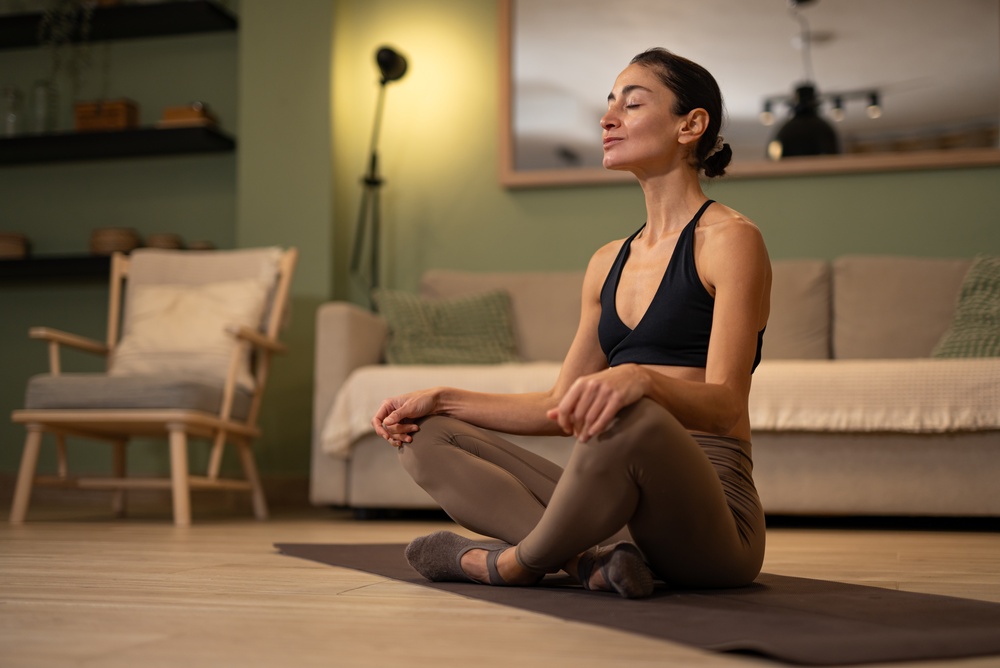
Silent meditation is what it is all about. You sit. You breathe. No music, no voice, no outside directions. It is only you and the naked and rough landscape of your mind.
The Test and the Prize
Silent meditation is sometimes regarded as a more advanced practice, but that need not frighten you.
- Developing Mental Muscle: You need to pull yourself up because you don’t have anyone to tell you. This develops great discipline of the mind.
- Self-Reliance: You come to know that you do not require an app or a YouTube video to be at peace. You know that the stress off-switch is not on your phone but within you.
- Greater Understanding: With complete silence, the layers of the mind, which are subtle in nature, start to unravel. You may find out information about yourself that a guided track that is concerned with relaxation may smooth over.
Two Comparisons: Who Wins?
To assist you in making a decision, we will examine how they compare to each other as far as a modern lifestyle and a classical yoga practice are concerned.
1. Focus and Concentration
Guided meditation assists you to concentrate by providing you with something outside to cling to. It is great when one has a monkey mind.
Silent meditation puts you to the test of generating your concentration. It is as though walking with a cane and walking without one. Both will get you there, but one will develop more core strength.
2. Emotional Processing
When you are in a really bad mood, say, in the midst of heavy grief or extreme worry, guided sessions may be very therapeutic. The voice you want is that of compassion.
Nevertheless, silent meditation gives you the chance to sit down and not be distracted by emotions. It’s a form of “radical honesty” with oneself.
3. Accessibility
Guided meditation is very much available. You can spend 5 minutes on a taxi or lunch break. A more deliberate ceremony, silent meditation typically involves a special room devoid of distractions where you will not be disturbed.
The Rishikesh Perspective: The Importance of Context
Also Read: The Five Sheaths of the Soul: Understanding Pancha Kosha
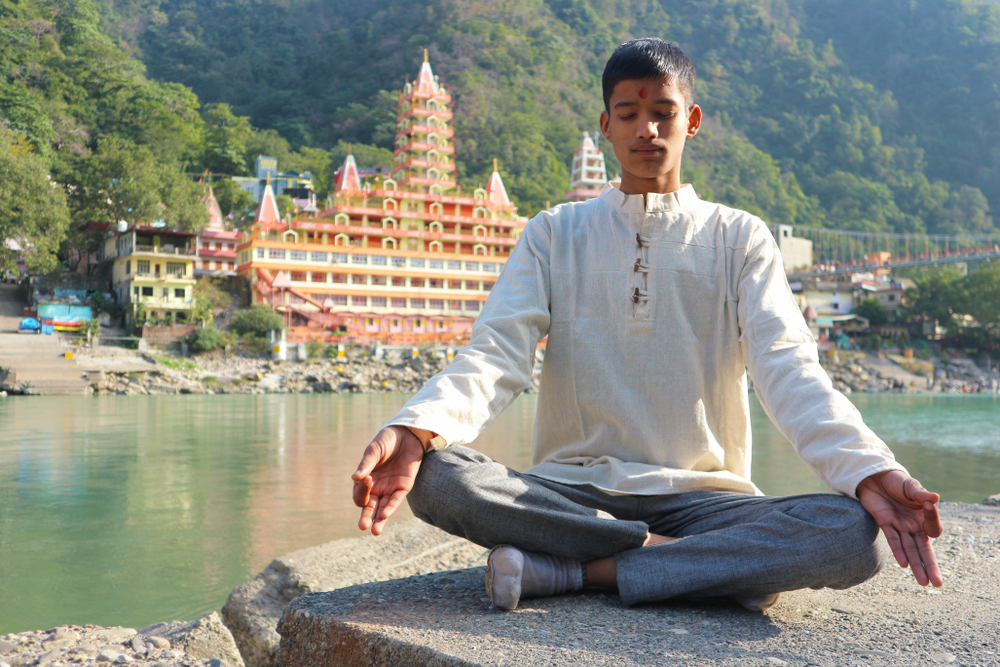
We live and practice in the Yoga Capital of the World, and we observe a beautiful mixture of the two. The day would start with a morning routine of a guided breathing (Pranayama) session to open up the energy channels of the body. They could be sitting in a silent Vipassana form as the sun sets over the Ganga.
We are of the opinion that yoga and meditation go hand in hand in Rishikesh. The physical (asanas) position the body to sit still and meditate on the mind to stillness in motion.
“Silence is the language of the soul. All other languages are poor translations.”
You will probably get both should you be visiting a yoga retreat in Rishikesh. The instructions assist you in getting your technique in line, and the silence assists you in getting your spirit in line.
The Way to Select Your Direction
Still unsure? Following is a brief guide on how to select your daily practice:
Select Guided Meditation When:
- You are a complete beginner.
- You are feeling overwhelmed by “brain fog” or high stress.
- You end up falling asleep in silent sittings.
- You want to practice towards a particular purpose (e.g., “metta” or loving-kindness meditation).
Select Silent Meditation When:
- You have been doing the practice long enough and feel stuck or plateaued.
- You desire to have strong self-control and mind toughness.
- You are distracted by the voice of a teacher or its personality or tone.
- You seek a spiritual encounter or inward questioning.
The “Hybrid” Approach: The Best of Both Worlds
You need not select a team! Actually, a majority of experienced practitioners employ a scaffolding method.
Begin your practice by taking 5-10 minutes of guided breathing or a body scan to calm your nervous system. When your body is heavy and your brain is no longer so frantic, then have the audio slowly fade and take the next 10 minutes in complete silence.
This allows you to use the guidance as a “launchpad” into the deep space of silence.
Useful Ideas in Your Practice
No matter what route you follow, remember these tips to make your mental health routine stick:
- Regularity is queen: 10 minutes per day is preferable to two hours once a week.
- Find Your “Asana”: You do not have to sit up in an ideal lotus position. Sit on a chair, lean against a wall, or use a cushion. The aim is a straight back and a free heart.
- Environment Matters: In a busy city, in particular, attempt to make a tiny sacred spot at home, with a plant or a candle. And when you are fortunate enough to be in Rishikesh, you can have the river sound be your automatic guided track.
- Be Nice to Yourself: Your head will roam. That is what heads do. Whether it is guided or silent, the magic of meditation occurs when you notice that you have wandered and bring yourself back in a gentle manner.
Final Thoughts
Better or worse? No. Better for you now, one? Absolutely.
The path between guided and silent meditation is a natural one that many take but that is not a linear one. And there will come days when even the most developed yogi will require a guided path that will assist him/her sail through a stressful day. And there will be days where an amateur will experience a deep silence in the silence between two breaths.
Meditation is returning home to yourself at the end of the day. It could be a guided bus ride or a silent stroll either way, but the end result is the same: a clearer mind, an open heart and a closer connection to the world around you.
When you are in our neck of the woods be sure to come by and have a session with us by the river. Breath, and sit, and seek: till then.
Happy meditating!