
Finding Relief: A Beginner’s Guide to Yoga for Cervical Spine Health
In this contemporary world, we dedicate a great portion of our lives to bending forward. We always have the pressure of having our necks bent straight, whether we are sitting on our laptops having a long shift, viewing our phones, or even in our cars, traversing through the heavy streets. Whether it was a constant pain that was at the bottom of your skull or it was a tightness that made it difficult to move your head, you are not alone. This neck pain is the pain between the seven tiny vertebrae that constitute your neck, otherwise known as the cervical spine, which is becoming an international epidemic.
But here is the good news: your body is really very resilient. We can discover natural and effective means of healing and strengthening the neck with the aid of the ancient knowledge of yoga, which is practiced in the so-called Yoga Capital of the World, namely Rishikesh.
At Maa Shakti Yog, we often see people struggling with tech neck and posture-related discomfort, which is why we recommend simple yoga-based solutions for cervical spine health. In this blog, we are going to briefly discuss how yoga for cervical health can assist you to recover your mobility, decrease the pain, and restore the lightness in your shoulders.
Learning About the Tech Neck Phenomenon
Before proceeding to the poses, we want to discuss the reason behind this. It weighs approximately 5 kilograms more than the human head. The problem is, however, that when you lean your head forward at 60 degrees to have a glance at a phone, the effective weight of your cervical spine rises to approximately 27 kilograms.
The result of this unremitting strain is the following:
- Weakness in the muscles of the upper back and neck.
- Less blood supply to the brain and upper limbs.
- Comprised discs, which are capable of causing long-term cervical problems.
Modern-day stressors could be counterbalanced by adding exercises to relieve pain in the neck and practicing mindful yoga in the daily routine.
Cervical Spine 5 Yoga Poses That Are Essential
As a rule, the neck yoga should be done gently. The spine of the neck is tender. These are not incentives we are seeking; we are seeking liberation and harmony.
1. Tadasana (Mountain Pose) and Rotations of the Neck.
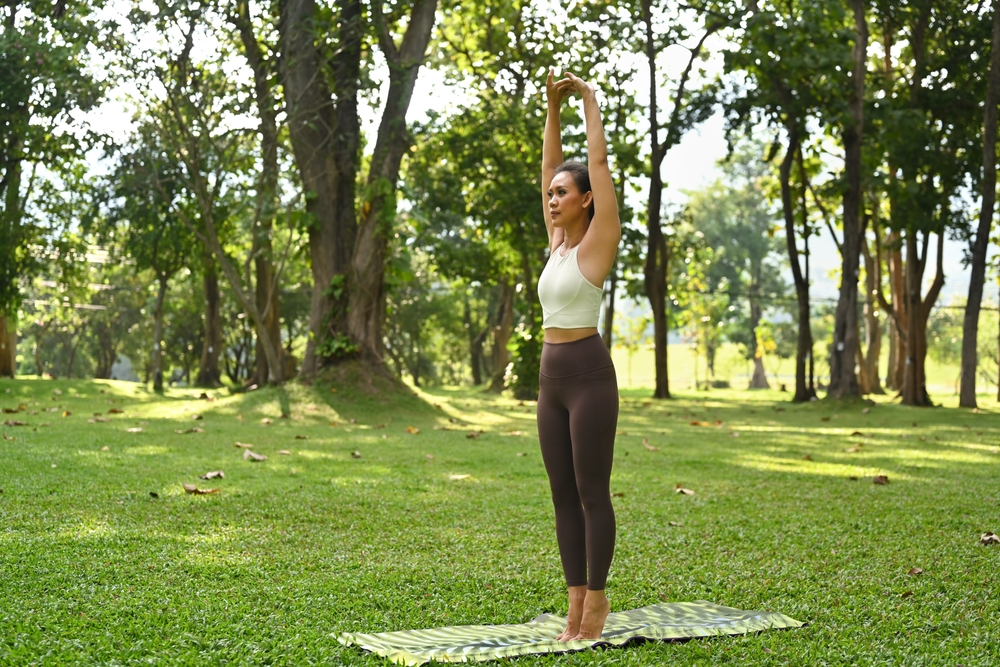
Your foundation is your beginning. Tadasana is the way to learn to stand in a manner that gravity works with us and not opposes us.
- How to do it: Stand with feet shoulder-wide. Suppose a rope was pulling at the head of your crown towards the sky. After you are tall, you have to slowly lower your chin to your chest.
- The Movement: Breathing slowly, roll your right ear towards the right shoulder. Breath out and fold the chin inwards. Repeat on the left.
- Why it works: It is one of the simplest stretches for stiffness in the neck, which realigns the vertebrae.
2. Marjari asana-bitilasana (cat-cow pose)
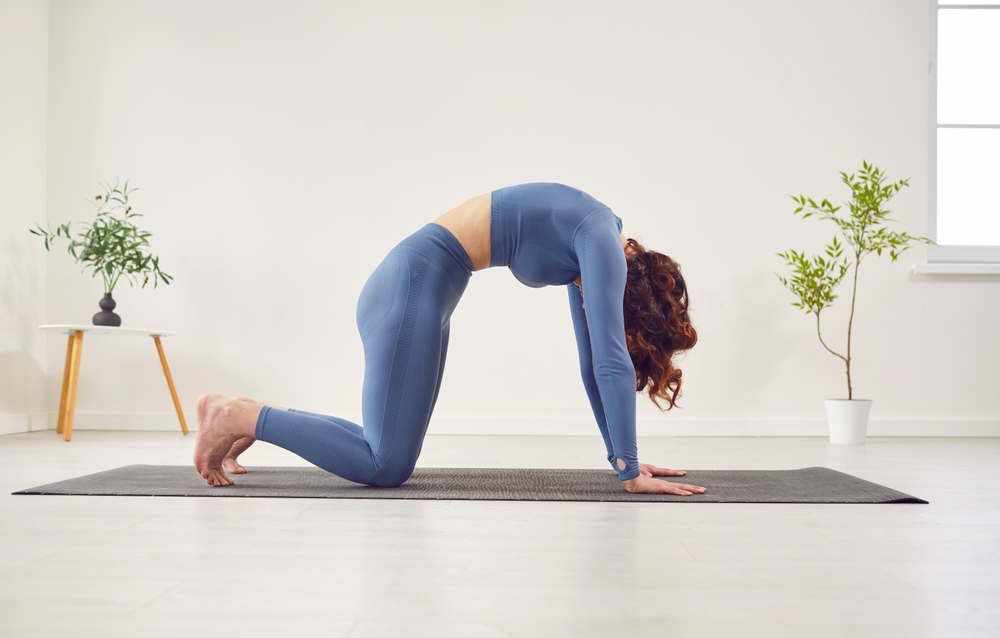
This is a classic for a reason. It follows breath in motion and forms a distance between the vertebrae of the tailbone and neck.
- Method: Lie on hands and knees. When you breathe in (Cow), suck in the belly and look up softly, opening the throat. You breathe out (cat), hunch your back, and tuck your chin to your chest.
- The Advantage: This promotes the flexibility of the spine and lubricates the neck joints.
3. Balasana (Extended Child’s Pose)
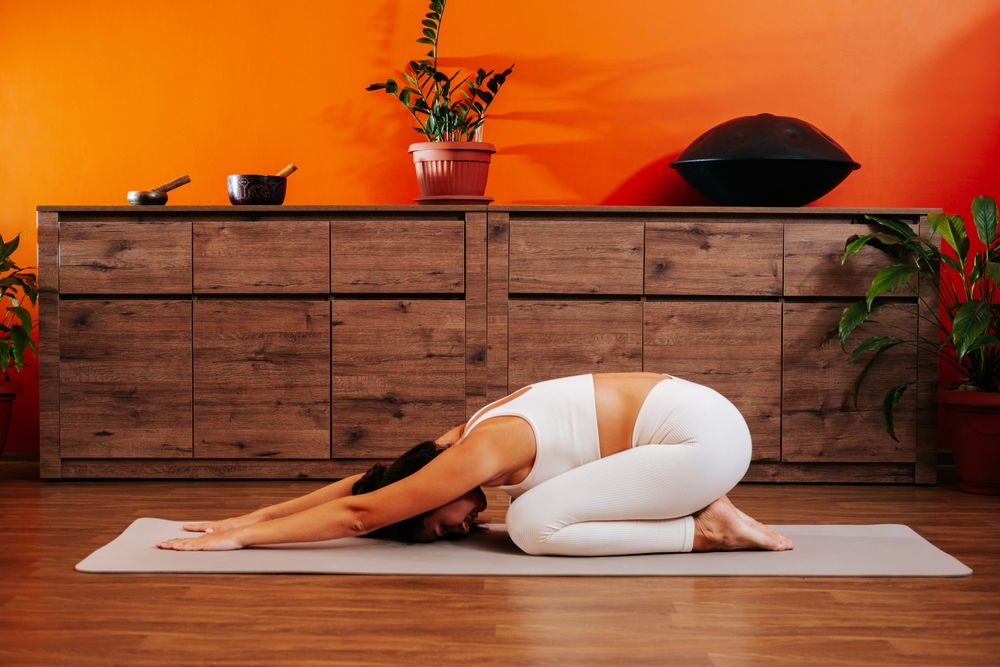
When your muscles between your shoulders and neck are very tense, it is your best friend.
- Instructions: Get on your knees on the floor and cross your big toes and sit down on the heels. Fold up, placing your forehead on the mat. Bring your arms either near you or leave them alongside you.
- The Advantage: This is a pose whereby the neck muscles can be off all through. It applies gravity to massaging the cervical spine.
4. Bhujangasana (Baby Cobra Pose)
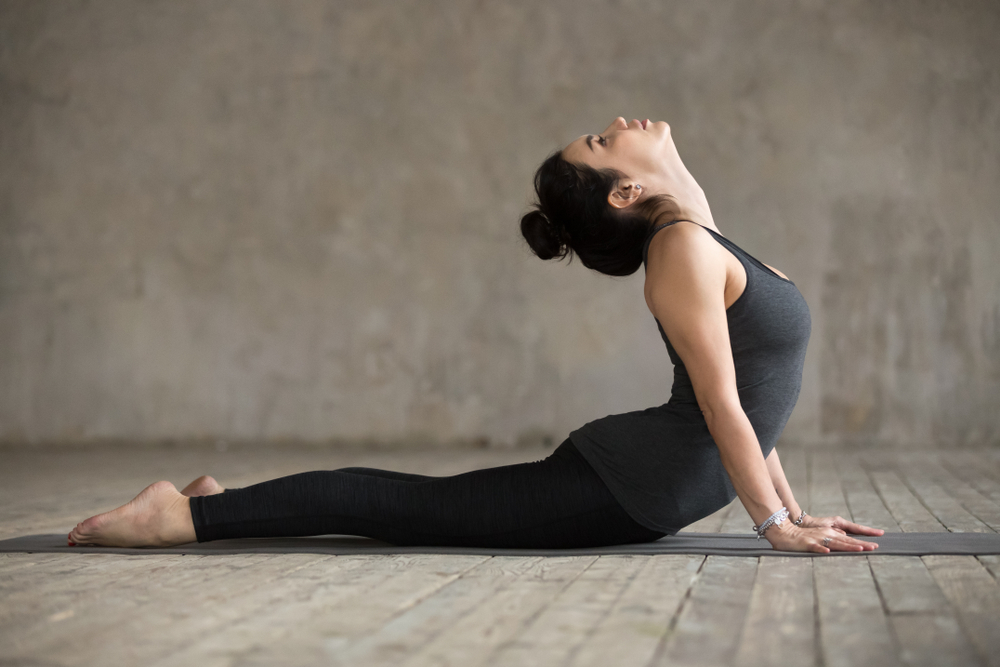
Most individuals believe that the neck pain only involves the neck, but this is mostly because of the weak upper back.
- How to do it: Lie in your position on your back with your hands under your shoulders. Bring your elbows close to the body. Take a breath in, and push your chest a few inches up off the ground with your back. Always look straight to the mat so that the back of the neck will be long.
- Reason why: This gives the extensor muscles of the spine a workout, and this keeps you in an upright posture during the day.
5. Setu Bandhasana (Bridge Pose)
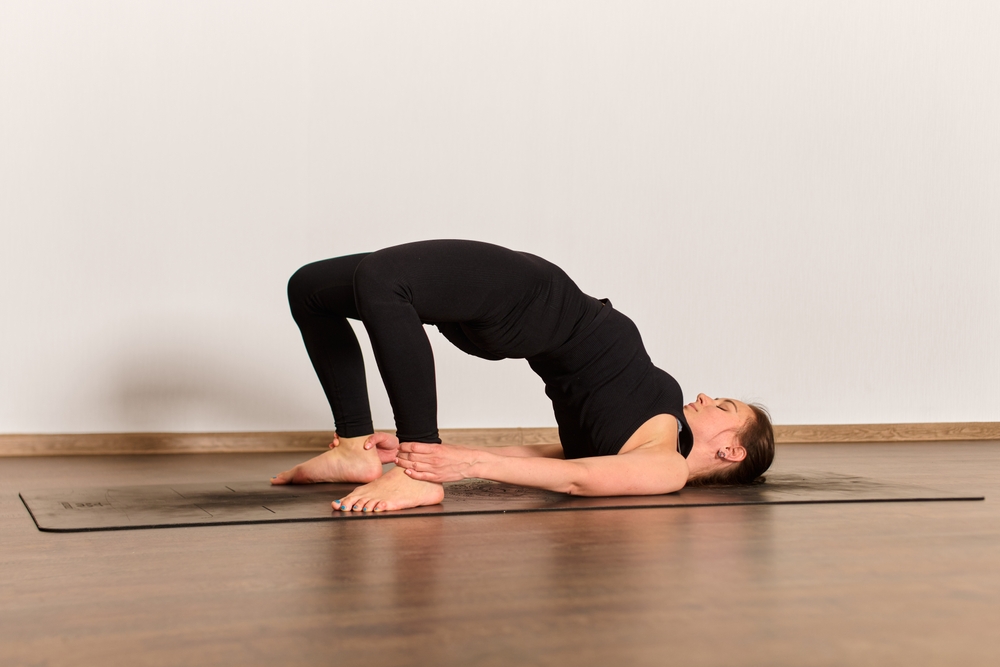
The pose is a good one to expand the chest and reverse the appearance of a round-shouldered shoulder.
- Position: Lie flat on your back with knees bent and feet on the floor. Raise hips towards the ceiling. As comfortable as it feels, cross the fingers behind you and shake your shoulders towards your spine.
- The Advantage: It provides a slight extension in the back of the neck and opens the center of the heart, which tends to be closed when one is working long hours in the office.
The Rishikesh Viewpoint: Why Alignment is Important
We lay stress on Drishti (focused gaze) and Pranayama (breath work) in the classic Hatha Yoga offered here in Rishikesh. When we refer to yoga in case of neck pain, we are not only stretching the muscles, but we are also moving prana (energy).
When you have a tight neck, you tend to have shallow breathing. When performing these poses, when you concentrate on breathing deeply with a diaphragm, you are telling your nervous system to relax. A loose nervous system results in loose muscles.
Finding Tips to Take Care of Your Back
There are some ways by which you can take care of your stiff neck and shoulder, which will help you in working better in your day-to-day life.
- Eye-Level Rule: In any case, it could be a monitor or phone, but bring it to your eye level. Do not take your head to the machine.
- The 20-20-20 Rule: Every 20 minutes, gaze at something 20 feet away for 20 seconds. Do this and, at the same time, do 3 mild neck rotations.
- Hydration: Between the vertebrae, there are discs, which are mostly water. They remain hydrated and thus plump and shock-absorbing.
Important Precautions
In case you have acute cervical spondylosis or a herniated disc, we suggest you should seek medical attention and then proceed with a new yoga program. Do not do any headstand (Sirsasana) or shoulder stand (Sarvangasana) unless you are strong and pain-free in the neck, and then these place a lot of weight on the cervical vertebrae.
Summary of Benefits
| Benefit | How Yoga Helps |
| Pain Reduction | Gently releases tight muscles and reduces inflammation. |
| Improved Posture | Strengthens the upper back to support the head properly. |
| Stress Relief | Calms the nervous system, which often holds tension in the neck. |
| Mobility | Increases the range of motion in the neck and shoulders. |
Final Thoughts
The process of healing your neck does not require a single long yoga session; it is small and continuous movements. It will help you to make a difference in your life, adding yoga to your daily routine, at least 10 minutes of cervical spine maintenance.
In the event that you end up in our lovely part of the world, pay a visit to a spot in our Maa Shakti Yogshala. There is actually a miracle in trying these movements as one is listening to the sound of Ganga flowing around. Until then, you must hold your head high, your shoulders easy, and your breath deep.
Namaste.